If you’ve ever followed a vanilla cake recipe exactly — quality vanilla extract, good butter, the right ratios — and still thought “this doesn’t taste like the one from the bakery,” you’re not imagining the gap. Professional bakeries often use compound flavor products that go beyond single-note vanilla. Two products that keep coming up when serious home bakers compare notes are butter vanilla emulsion (a water-based flavor carrier that suspends flavor compounds without alcohol, meaning it doesn’t bake off) and cake batter extract (a blended flavoring that mimics the specific sweet-starchy aroma of boxed cake mix, which is, somewhat embarrassingly, what most of us grew up associating with “birthday cake”). This guide breaks down how both work, where each one earns its place, and — critically — how to use them together without ending up with something that tastes like a candle.
| EDITOR'S PICKLorAnn Cinnamon Oil SS Flavor | Mid-tierMcCormick Cake Batter Flavor | Budget pickMcCormick Strawberry Extract Wi… | |
|---|---|---|---|
| Flavor | Cinnamon | Cake Batter | Strawberry |
| Size | 0.0125 fl oz | 2 fl oz | 1 fl oz |
| Pack Count | 4 | 1 | 1 |
| Total Volume | 0.05 fl oz | 2 fl oz | 1 fl oz |
| Type | Oil (SS) | Flavor | Extract |
| Natural Flavors | — | — | ✓ |
| Price | $7.88 | $6.49 | $2.32 |
| See on Amazon → | See on Amazon → | See on Amazon → |
Why Butter Vanilla Emulsion Converts People Who Start with Plain Vanilla
The most striking thing about aggregated buyer reviews of LorAnn Butter Vanilla Bakery Emulsion is how often they describe a permanent switch. Across hundreds of reviews, the pattern that stands out, per reviewers at multiple retail platforms, is the phrase “I only use this now” — specifically in the context of buttercream and cream cheese frosting. That’s a meaningful signal. People who discover this product don’t typically rotate it alongside plain vanilla; they replace it.
The reason makes sense once you understand the format difference. Standard vanilla extract is alcohol-based. Alcohol carries flavor compounds well, but it also volatilizes during baking — meaning a portion of your vanilla investment literally evaporates in the oven. For high-heat applications like pound cake or cookies, that’s partly manageable because the Maillard browning creates its own complexity. But for no-bake applications — buttercream, ganache, cold whipped cream, uncooked frostings — the alcohol note can actually interfere, and you lose none of the volatilization benefit because there’s no heat to drive it off anyway.
An emulsion, by contrast, suspends flavor in a water-and-gum base (typically gum arabic or xanthan gum). The Spruce Eats’ guidance on emulsions notes that water-based carriers hold flavor more stably in baked goods because they don’t flash off the way alcohol does, and they integrate more smoothly into aqueous systems like royal icing. For buttercream specifically, where you’re already working with fat (butter) and sugar in suspension, an emulsion blends in without the slight sharp edge that high-proof extract can contribute.
The “butter” component of LorAnn Butter Vanilla Bakery Emulsion is doing real flavor work here, not just naming. Per LorAnn’s published product specification, this is a compound flavor that layers a warm, creamy butter note under the vanilla — effectively mimicking the base flavor of a well-made American buttercream even before you add your actual butter. For shelf-stable buttercream applications (those made with shortening rather than real butter, common in decorated cake operations where refrigeration isn’t practical), reviewers consistently report that this emulsion provides the richness that real butter would have contributed, compensating for what shortening lacks in flavor.
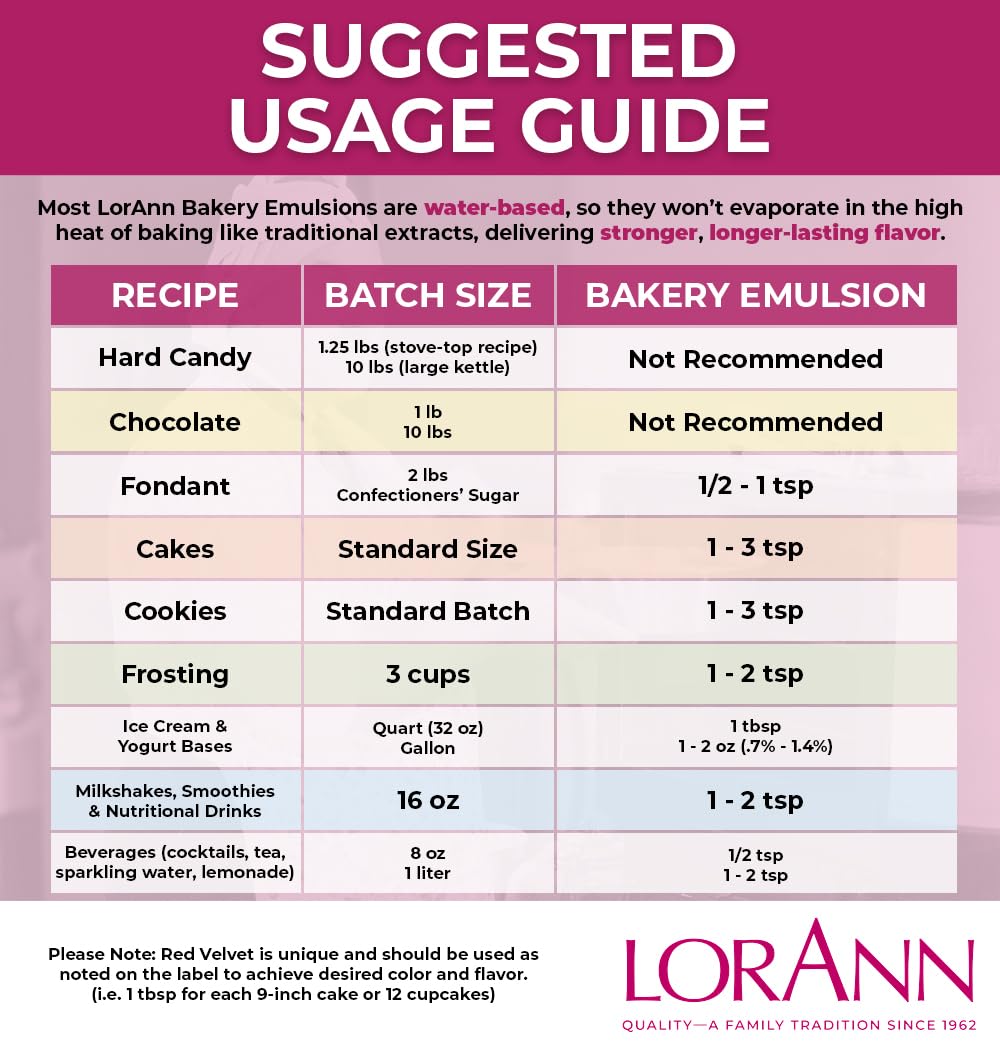
The practical concentration point: LorAnn’s spec sheet lists usage at roughly 1 teaspoon per recipe designed for 1–2 teaspoons of extract. Because the emulsion format doesn’t burn off, you generally don’t need to increase quantity to compensate for heat — if anything, new users occasionally report starting conservatively and scaling up once they calibrate to the flavor intensity.
What McCormick Cake Batter Flavor Actually Tastes Like (And What It Doesn’t)
There’s a real expectation mismatch happening in the reviews for McCormick Cake Batter Flavor, and it’s worth addressing directly before you order. A meaningful number of buyers expect something sweet, bright, and overtly artificial — the flavor equivalent of birthday cake-scented lip gloss. What they get is more nuanced than that, and for most serious applications, more useful.
Multiple reviewers describe the flavor as leaning toward pound cake rather than funfetti birthday cake. That’s accurate and deliberate. The flavor profile is warmer, more buttery, and less sweet-forward than the candy-aisle interpretation of “cake batter.” Cook’s Illustrated’s methodology for evaluating vanilla and baking flavors emphasizes that compound baking flavors should complement rather than dominate other ingredients — and McCormick’s cake batter flavoring sits in that zone. It reads as “bakery” rather than “artificial,” which is the reason it works in off-label applications: reviewers have reported using it in ice cream bases, whipped cream, and — notably — pancake batter, where the effect is described as a “diner pancake” warmth rather than a candy sweetness.
If you’re specifically chasing the synthetic-sweet birthday cake note you remember from box mix, this product will disappoint. If you want something that makes from-scratch baked goods smell and taste more like they came from a professional operation, it earns its place in the pantry.
One comparison worth flagging: Fine Cooking’s editorial overview of baking extracts draws a distinction between imitation almond extract and pure almond extract that applies here — imitation versions are often less bitter and integrate more cleanly into water-based batters. McCormick’s culinary imitation almond extract is specifically called out by reviewers on this point: it mixes more evenly into cake batter without the harsh topnote that pure almond sometimes contributes. The same principle applies to cake batter flavoring — the “imitation” or “artificial” label on compound bakery flavors doesn’t automatically mean lower quality in application; it means a different flavor architecture optimized for blending.
By the Numbers: Concentration and Usage Rates
| Product | Format | Typical Usage Rate | Heat Stability |
|---|---|---|---|
| LorAnn Butter Vanilla Bakery Emulsion | Water-based emulsion | ~1 tsp per batch | High — doesn’t volatilize |
| McCormick Cake Batter Flavor | Extract/compound | ½–1 tsp per standard cake | Moderate — some loss at high heat |
| Standard pure vanilla extract | Alcohol-based | 1–2 tsp per batch | Moderate — alcohol volatilizes |
| LorAnn concentrated flavor oils | Oil-based | 1/8–¼ tsp per batch | High — oil carrier is stable |
Usage rates based on manufacturer published documentation and aggregated reviewer calibration notes. Results vary by recipe fat content, sugar concentration, and mixing method.
The Availability Problem (And Why You’ve Already Searched Three Stores)
If you’ve gone looking for butter extract at your local grocery store, you’re in good company with a frustrating experience. Several reviewers in aggregated purchasing data specifically mention driving to four or more stores before ordering online — and this tracks with the product’s shelf placement reality. Butter extract and butter vanilla emulsion occupy a strange middle shelf in retail: specialty enough that most grocery chains don’t stock it consistently, common enough that bakers are surprised it’s hard to find.
This is one of the genuinely useful cases for online ordering. The shelf life on properly stored emulsions and extracts — kept in a cool, dark location, away from heat sources — is typically 3–5 years for alcohol-based extracts and 2–3 years for water-based emulsions per manufacturer guidance. Ordering a few bottles at once is not a waste; it’s pantry strategy. The cost-per-use math also favors slightly larger quantities, since usage rates are measured in teaspoons and a 4-ounce bottle of LorAnn Butter Vanilla Emulsion represents dozens of batches.
Serious Eats’ science of vanilla extract notes that storage consistency matters more than most bakers realize — temperature swings accelerate flavor degradation in both extract and emulsion formats. A dedicated extract shelf in a pantry or cabinet (not above the stove, not in direct sunlight) extends shelf life meaningfully.
Combining Butter Vanilla Emulsion and Cake Batter Flavor in One Recipe
The combination works, and it’s actually one of the better arguments for stocking both. Here’s the decision logic:
Butter vanilla emulsion contributes base warmth and richness — it reads as dairy and vanilla without being overtly vanilla-forward. Cake batter flavoring contributes the starchy-sweet “bakery” top note that makes something taste finished and professional rather than homemade in the flat sense. Used together, they create a layered effect that neither can achieve solo.
The tricky variable is balance. Because the emulsion is doing the base work, you can often reduce the cake batter flavoring to half your normal amount when using both together — say, ½ teaspoon of cake batter flavor alongside 1 teaspoon of butter vanilla emulsion in a standard layer cake recipe. Reviewers who combine both consistently note that the cake batter note should be a background suggestion, not the dominant flavor; if your cake tastes identifiably of “cake batter,” you’ve probably used too much.
For buttercream specifically: start with the emulsion at full rate, add cake batter flavoring at ¼ teaspoon for a standard batch, taste, and scale up in ⅛-teaspoon increments. The fat and sugar in buttercream suppress some flavoring intensity, but they also amplify certain sweet aromatic notes — the cake batter flavoring can tip into “artificial” territory faster in high-sugar applications than in cake batter itself.
Frequently Asked Questions
What is the difference between LorAnn Butter Vanilla Bakery Emulsion and plain vanilla extract in buttercream? Plain vanilla extract is alcohol-based and contributes a clean, floral vanilla note. The alcohol can add a slight sharpness in uncooked applications. LorAnn Butter Vanilla Emulsion is water-based with a compound flavor profile — it adds both a vanilla character and a warm, creamy butter note that plain vanilla doesn’t provide. Reviewers consistently describe buttercream made with the emulsion as tasting richer and more “finished” without any alcohol edge.
Will McCormick Cake Batter flavor make my frosting taste artificial or like real bakery cake? It leans toward real bakery rather than artificial candy — specifically pound cake rather than bright birthday cake sweetness. At moderate usage (½ teaspoon or less in a standard batch), most reviewers describe it as adding a professional bakery warmth. At higher quantities it can tip sweet and synthetic. Start low and taste as you go.
Does LorAnn Butter Vanilla Emulsion work in shelf-stable buttercream that doesn’t need refrigeration? Yes — this is one of its documented strengths. Reviewers using shortening-based shelf-stable buttercream (common in decorated cake operations) specifically cite the emulsion as compensating for the flavor flatness that shortening contributes compared to real butter. The emulsion format is also stable in high-sugar environments where alcohol-based extracts can sometimes cause consistency issues.
Can I find butter extract at the grocery store or is it easier to order online? Easier to order online, consistently. Multiple buyers in aggregated review data describe checking four or more stores without success. Standard grocery chains stock it inconsistently if at all. Online ordering removes the search friction, and since both extracts and emulsions have multi-year shelf lives when stored properly, buying in quantity makes practical sense.
How much McCormick Cake Batter flavor should I add to a standard cake recipe without overpowering it? Start at ½ teaspoon for a standard two-layer (8- or 9-inch) cake. Per McCormick’s published usage guidance and consistent with reviewer calibration notes, this is a flavoring where less is more — the pound cake / bakery warmth registers clearly at low concentrations. Scale up by ¼ teaspoon if you want a stronger effect, but taste the batter at each increment.
Can I combine butter vanilla emulsion and cake batter flavor in the same recipe? Yes, and it’s a well-regarded combination. Use butter vanilla emulsion at its standard rate as the base layer, then add cake batter flavoring at roughly half your normal amount. The two products occupy different parts of the flavor profile — base richness versus bakery top note — so they complement rather than compete, as long as you keep the cake batter component subordinate.