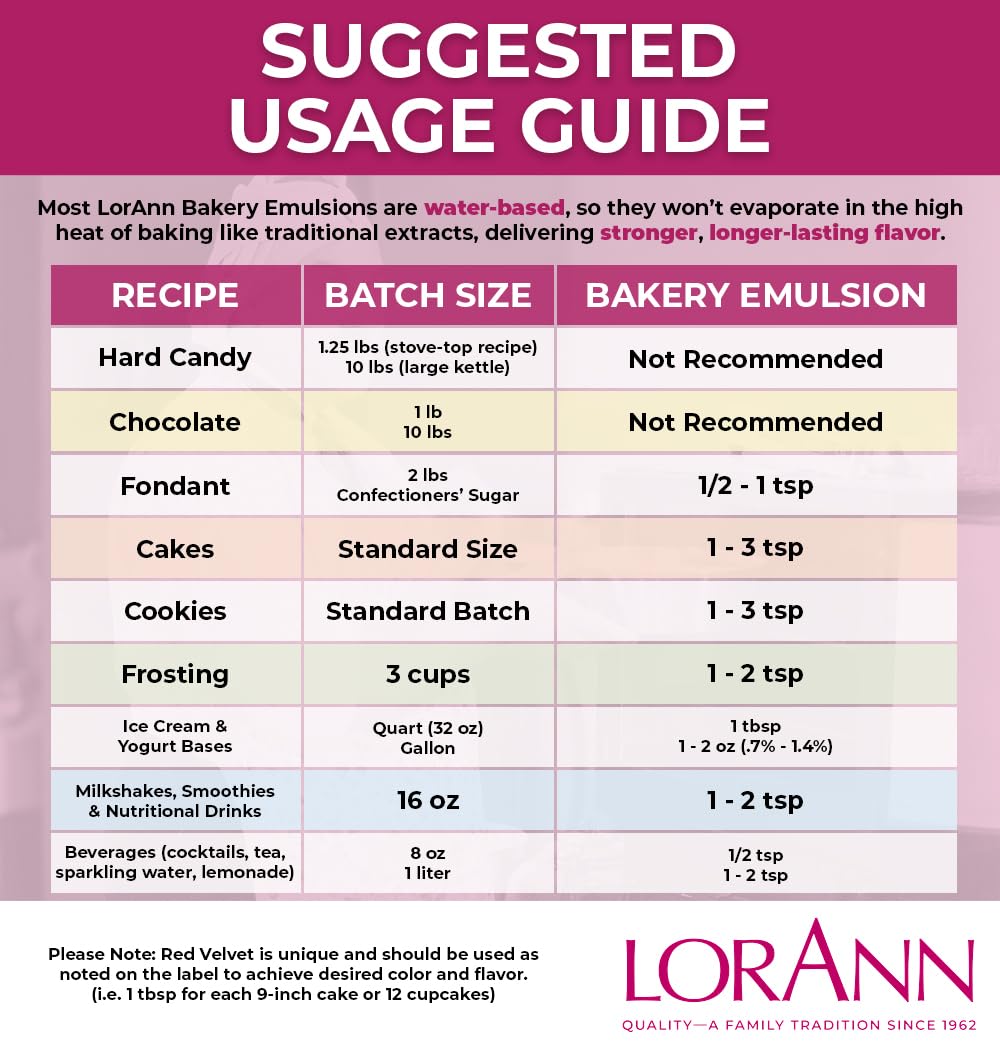
Most baking extracts are designed with heat in mind — the assumption is that whatever harsh edge or alcohol note is present will cook off in the oven. That assumption quietly breaks down the moment you add the same extract to a cold protein shake, a sparkling water, or a room-temperature smoothie. If you’ve ever noticed a faintly boozy or chemical bite in a drink you tried to flavor, that’s the mechanism at work. Flavoring concentrates, broadly speaking, come in three main formats: alcohol-based extracts (the most familiar; vanilla extract is the classic example), emulsions (water-based, stabilized with a food-grade gum so oil and water stay blended), and super strength or flavoring oils (highly concentrated, oil-soluble, no carrier solvent). Each format has a different behavior profile in uncooked, cold, or liquid-dominant applications — and making the wrong choice costs you more than flavor. This guide lays out which formats hold up, which don’t, and how to calibrate your usage so your drinks actually taste intentional.
| EDITOR'S PICKSimply Organic Non-Alcoholic Va… | Mid-tierLorAnn Oils Strawberry Bakery E… | Budget pickLorAnn Oils Almond Bakery Emuls… | |
|---|---|---|---|
| Flavor | Vanilla | Strawberry | Almond |
| Alcohol-free | ✓ | — | — |
| Certified organic | ✓ | — | — |
| Volume | 4 oz | — | — |
| Gluten-free | — | ✓ | ✓ |
| Price | $16.98 | $8.29 | $7.15 |
| See on Amazon → | See on Amazon → | See on Amazon → |
Why Format Matters More Than Brand in Cold Applications
When heat is removed from the equation, you lose the chemical process that metabolizes ethyl alcohol off the palate. Per Serious Eats’ overview of vanilla extract science by Kenji López-Alt, alcohol-based extracts rely heavily on that evaporation to read as “clean vanilla” rather than “vanilla mixed with vodka.” In a hot baked good, you almost never notice the carrier. In an iced shake or a sparkling soda, the alcohol concentration — typically 35% by volume in compliant vanilla extracts, per FDA standards for pure extracts — can land as a sharp, medicinal edge, especially at higher usage rates.
Emulsions sidestep this entirely. Because they’re water-based and suspended with a gum system (often xanthan or gum arabic), they disperse evenly in cold liquid without separation. LorAnn bakery emulsions, a go-to for home bakers, have built up a parallel reputation in uncooked applications precisely because of this. Across aggregated buyer reviews, the pattern is consistent: the almond emulsion described as “freaking delicious” in protein shakes and the butterscotch emulsion praised for homemade cream soda aren’t outlier uses — they’re the format doing what it’s engineered to do.
Super strength oils (LorAnn’s line, for example, are typically 3–4× more concentrated than a standard extract) behave differently again. They’re oil-soluble and highly potent, which means they can integrate into fat-containing bases — whole milk, cream, nut milks — surprisingly well, but they require precision dosing to avoid overwhelming the drink. The pistachio super strength oil that reviewers describe as “very authentic” in hot-liquid applications works the same way in cold; the fat in dairy provides a vehicle. In low-fat or water-dominant drinks like sparkling water, dispersion is less even and you may notice concentration hot spots.
Alcohol-free extracts sit in a middle category. They replace ethanol with a glycerin or propylene glycol base, which eliminates the boozy note but introduces a different flavor profile — slightly sweeter, sometimes with a faint syrupy quality at high doses. For cold applications, they’re generally the most accessible substitution when you’re working with alcohol-sensitive customers or formulations.
The Vanilla Decision: Alcohol-Based vs. Alcohol-Free in Cold Drinks
Vanilla is where this tradeoff shows up most visibly in buyer behavior, and the Simply Organic non-alcoholic vanilla flavoring has become a meaningful reference point in this conversation. A reviewer who conducted side-by-side testing of multiple vanilla options in protein shakes — comparing alcohol-based pure extracts against the Simply Organic alcohol-free version — declared it the clear winner for cold, uncooked applications. That’s a useful signal worth taking seriously: the glycerin carrier in the Simply Organic formula doesn’t cook off, but in a shake or smoothie context, where sweetness already anchors the drink, the slightly fuller mouthfeel reads as a feature rather than a flaw.
Nielsen-Massey pure vanilla extract is the industry benchmark for baking quality, and its technical documentation confirms what experienced bakers already know: the Madagascar Bourbon variety is phenolic-heavy and complex in ways that heat develops beautifully. In cold applications, the alcohol carrier doesn’t disappear, which means you’re drinking more of the raw extract character. For many vanilla shakes, that’s fine — even pleasant at low doses. The tradeoff is: if you’re at or above 1 teaspoon per 16 oz serving, you’ll start to notice the ethanol. Drop to ½ teaspoon and you’re in a workable range for most cold drinks, though you sacrifice some intensity.
By the numbers:
| Format | Typical Usage (per 8 oz serving) | Alcohol Content | Cold-Drink Behavior |
|---|---|---|---|
| Pure vanilla extract (35% ABV) | ¼–½ tsp | ~35% | Works at low dose; sharp at high dose |
| Alcohol-free vanilla (glycerin base) | ¼–½ tsp | 0% | Clean, slightly sweet; safe at higher dose |
| Vanilla emulsion | ¼–½ tsp | 0–5% | Stable dispersion; best all-around for cold |
| Super strength vanilla oil | 1–3 drops | 0% | Intense; requires fat-containing base |
The Lavender Use Case: Café Copycats and Concentration Traps
One of the more specific pattern in buyer behavior worth addressing directly: Kate Naturals lavender extract reviews are dominated by people trying to replicate branded coffee shop drinks at home to cut costs. The intent is straightforward — a lavender drink at a chain runs $6–8; a bottle of lavender extract that survives 30+ drinks at home changes the math fast. But the execution traps are real.
Lavender extract (an alcohol or glycerin-based extraction of lavender flavor compounds) and lavender syrup (a sugar-water solution infused with lavender) behave completely differently in cold-drink applications. Lavender syrup integrates immediately, sweetens as it flavors, and distributes evenly in cold liquid — it’s purpose-built for this. Lavender extract is concentrated, unsweetened, and in alcohol-based forms will carry that sharp note into your drink if you use more than a few drops. Reviewers of Kate Naturals lavender extract consistently note that less is genuinely more: 2–4 drops in a large drink is the reported sweet spot, and overuse produces a soap-adjacent note that’s characteristic of lavender’s linalool compounds at high concentration.
The cost case still holds if you’re disciplined with dosing. The substitution guidance: if a coffeehouse drink uses lavender syrup, you cannot simply swap in equal volume of extract. You’d use approximately 2–3 drops of extract plus a neutral sweetener to approximate the flavor and sweetness profile of ½ oz lavender syrup. That ratio is the piece most buyers skip.
Super Strength Oils in Carbonated Drinks: The Soda Application
The butterscotch super strength oil as a “revelation for homemade cream soda” is one of the more interesting use cases that surfaces consistently in buyer reviews — and it’s a useful template for thinking about oil-based flavoring in carbonated applications generally.
Super strength oils don’t disperse cleanly in plain carbonated water on their own. They need either a fat-based carrier (dairy, a nut milk, a cream soda base), or they need to be pre-dispersed in a small amount of a compatible emulsifier before hitting the water — or you accept that you’ll see some surface floating and stir the drink before each sip. For SodaStream-style home carbonation systems, the workflow that works based on aggregated user accounts: add 1–3 drops of super strength oil to your still water before carbonating, not after. This way the flavoring distributes through the liquid during the carbonation cycle rather than sitting on top.
LorAnn’s own usage guidelines, per their published documentation, suggest starting at 1 drop per 8 oz for super strength oils in beverages and adjusting from there. At that rate, a small bottle (1 dram / 3.7 mL) yields approximately 75–90 drink servings — a cost-per-use figure that makes even the higher-priced specialty oils competitive with commercial flavored syrups over time.
The Flavor Apprentice’s dilution guidelines for flavor concentrates used in beverage applications recommend diluting to 1–5% of the total liquid volume for most concentrate types in the first test, then scaling. This translates roughly to the same starting range LorAnn recommends: a few drops per cup, not a few teaspoons.
Frequently Asked Questions
Can I put LorAnn bakery emulsions directly into hot liquid without it separating?
Generally yes, with reasonable expectations. LorAnn emulsions are designed to be heat-stable through baking temperatures, so the emulsion system doesn’t break in hot liquid. Reviewers in hot-drink applications don’t report visible separation at typical drink temperatures. That said, very high-fat or very high-sugar applications may behave differently — stir after adding rather than assuming it self-disperses.
How many drops of super strength oil should I use in a single cup of drink?
LorAnn’s published usage guidance starts at 1 drop per 8 oz for beverages. For flavors that are inherently bold (cinnamon, clove, peppermint), stay at 1 drop. For sweeter, softer profiles (butterscotch, almond, vanilla), 2–3 drops in 8–12 oz is the range reviewers describe as “right.” Always add drops one at a time and taste between additions — these are 3–4× more concentrated than standard extracts.
Will alcohol-based vanilla extract taste boozy in a cold protein shake?
At low doses (¼ tsp in a 16 oz shake), most people won’t notice. At ½ tsp or above in a cold, uncooked drink, the ethanol carrier becomes detectable as a background sharpness — not overwhelmingly boozy, but present. If you’re sensitive to this or formulating for an alcohol-sensitive customer, switch to an alcohol-free vanilla or a vanilla emulsion. The Simply Organic non-alcoholic vanilla flavoring in particular earns strong marks in exactly this application from buyers who’ve done direct comparisons.
What is the difference between lavender extract and lavender syrup for use in drinks?
Lavender syrup is sweetened and pre-diluted — it flavors and sweetens simultaneously, and dispenses evenly in cold liquid. Lavender extract is unsweetened, highly concentrated, and often alcohol-based. You use it in drops, not ounces, and you need a separate sweetener to approximate the full profile of a commercial lavender syrup. Neither is strictly better; they’re different tools. If your goal is simplicity and consistency, syrup is easier to control. If your goal is cost-per-use efficiency and flavor customization, extract gives you more leverage — once you calibrate your dose.
Is Watkins alcohol-free vanilla strong enough to flavor a smoothie or shake?
Watkins alcohol-free vanilla uses a propylene glycol base, which carries vanilla flavor compounds effectively. Reviewers note it performs closer to a standard extract in strength — not as intense as a super-strength concentrate, but holding its own against the typical ½ tsp usage rate for a 16-oz drink. In fat-containing bases (dairy, nut milk), it integrates cleanly. In water-dominant smoothies, start at ¼ tsp and scale up.
Can I use LorAnn super strength oil in a SodaStream or homemade sparkling water?
Yes, with one important sequencing note: add the oil to the still water before you carbonate, not after. This distributes the flavoring through the liquid rather than leaving it floating on the carbonated surface. Start at 1 drop per 8 oz. For a full 1-liter SodaStream bottle, 3–5 drops is the range reviewers cite as balanced for most flavors — though bold flavors like cinnamon or peppermint should stay at the lower end.
The Decision Rule
If you’re choosing a flavoring format for a cold, uncooked application, the framework is this:
- If the drink is water-dominant (sparkling water, lemonade, light smoothie): choose an emulsion or an alcohol-free extract. Pre-disperse oils in a small amount of fat or accept some settling.
- If the drink is fat-containing (protein shake, dairy-based, nut milk): super strength oils work well and disperse more reliably; emulsions are also excellent.
- If you’re working with alcohol-sensitive customers or populations: alcohol-free vanilla (Simply Organic, Watkins) or emulsions are the category defaults.
- If you’re replicating a branded café drink: extract dosing is measured in drops, not teaspoons — build your formula around that, then add sweetness separately to match what syrup would contribute.
- If cost-per-use is part of the decision: super strength oils win on yield (75–90 drinks per dram), but require more discipline in dosing. Emulsions are more forgiving and more likely to produce consistent results across a production run.
The core intuition to develop here: format is not a branding choice, it’s a chemistry choice. Match the format to the liquid’s fat content, temperature, and sweetness context, and the results follow.