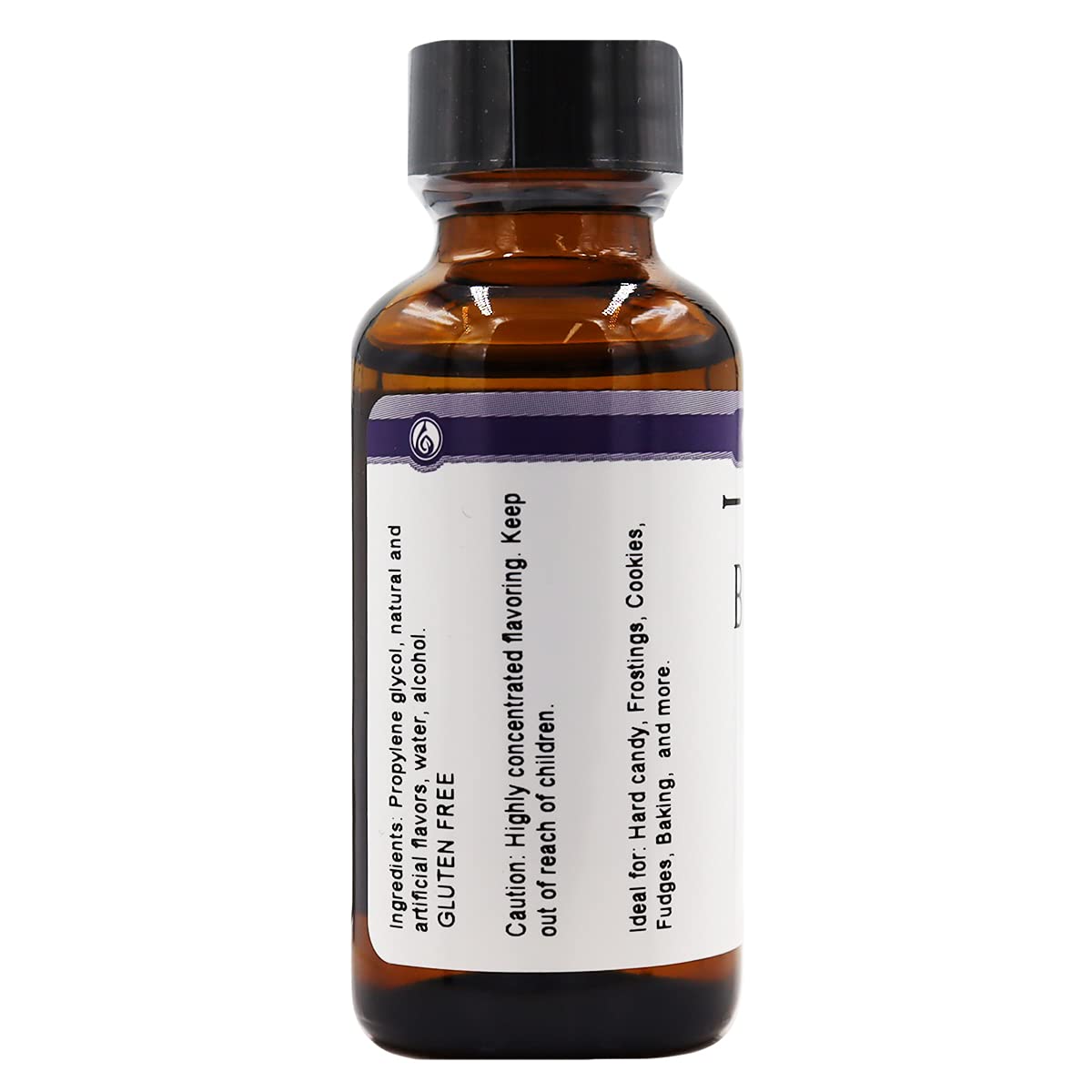
If you have ever grabbed a bottle of vanilla extract and used it to flavor a batch of hard candy, you probably ended up with candy that tasted like very little — or nothing at all. That’s because most standard baking extracts are water-based, and water flashes off almost instantly when it hits 300°F sugar syrup. LorAnn Super Strength flavoring oils are a different animal. They are highly concentrated, oil-soluble flavor compounds designed to survive the extreme heat of candy making and to deliver intense flavor at very small doses — we’re talking drops, not teaspoons. If you’re new to working with them, the label can feel cryptic: “4x strength” means you use roughly one-quarter the amount you’d use of a standard extract. Get that ratio wrong in either direction and you’ve either wasted a pound of sugar or ended up with candy that tastes like chapstick. This guide breaks down exactly how concentration works, what heat stability actually means in practice, and how to dose correctly across candy, baking, and beverage applications so you don’t burn a batch finding out the hard way.
What “4x Concentration” Actually Means at the Bench
The “Super Strength” designation on LorAnn’s line refers to the flavor load relative to an imitation extract baseline — not to pure essential oil content, which varies by flavor. Per LorAnn’s own usage and conversion documentation, their Super Strength oils are formulated to deliver roughly four times the flavor intensity of a standard imitation extract by volume. In practice, the conversion they publish looks like this:
By the numbers:
- 1 teaspoon standard extract → ¼ teaspoon LorAnn Super Strength oil
- 1 dram (⅛ fl oz / ~3.7 mL) LorAnn = flavors approximately one pound of hard candy
- Recommended starting dose for most applications: 1 dram per batch, scaled from there
- Typical retail price per dram: $3.50–$5.00, making cost-per-batch highly efficient
That “one dram per pound of candy” number is important because it gives you a fixed anchor. From there, you calibrate up or down based on the flavor’s natural intensity (citrus oils tend to be assertive; fruit flavors like watermelon often want a touch more) and your audience’s preference for boldness.
Where practitioners get tripped up is conflating “4x strength” with “4x essential oil concentration.” Some LorAnn Super Strength oils are genuine essential oils or single-compound isolates (peppermint, cinnamon, lemon). Others are synthetic flavor molecules blended with a carrier — often medium-chain triglyceride (MCT) oil or propylene glycol. The concentration claim applies to flavor intensity relative to the extract baseline, regardless of whether the flavor is natural or artificial. Cook’s Illustrated’s overview of baking extracts versus oils notes this distinction matters mostly when you’re working with alcohol-sensitive applications (like chocolate tempering) or when you’re concerned about regulatory labeling for a commercial product.
Heat Stability: Why These Oils Work Where Extracts Fail
Hard candy is made by cooking a sugar-water solution to the hard crack stage — between 300°F and 310°F (149°C–154°C). At those temperatures, anything water-soluble vaporizes. Standard extracts, which are typically 35% alcohol and water-based flavor compounds, contribute almost nothing by the time the candy sets. Serious Eats’ breakdown of candy sugar stages confirms that volatilization of aromatic compounds accelerates sharply above 250°F, which is why the sequencing of when you add flavoring matters as much as what you add.
LorAnn Super Strength oils are oil-soluble. Oil has a much higher boiling point than water or ethanol, and the flavor molecules encapsulated in an oil carrier stay in suspension through the cooking process better than their water-based counterparts. Fine Cooking’s reference on how flavor compounds survive heat notes that lipid-soluble flavor molecules also bind more effectively to fat matrices in finished products, which is why oil-based flavors tend to have a “rounder,” more sustained flavor release in high-fat applications like buttercream or chocolate.
The practical heat stability hierarchy for LorAnn Super Strength oils:
- Hard candy / lollipops (300–310°F): These oils are purpose-built for this. Add after pulling the pan from heat, right before pouring, to preserve volatile top notes. The base flavor compounds survive; the top-note aromatics are still slightly heat-sensitive, so timing matters.
- Baked goods (325–375°F): Oil-soluble flavors outperform extracts here, but bake time matters more than temperature. Shorter-bake items like cookies hold flavor better than a 60-minute pound cake.
- Chocolate and confectionery coatings: Oil-soluble is essential — even a few drops of water-based extract can seize chocolate. LorAnn oils are safe here, but use sparingly; chocolate amplifies flavor intensity.
- Beverages and frostings (no heat): Oil-soluble flavors require an emulsifier or fat matrix to disperse evenly. In a water-based simple syrup or unfrosted cake batter, oil-based flavors can pool or streak. This is where a water-soluble version or a true emulsion (like Amoretti or OliveNation emulsions) would serve you better.
The Spruce Eats’ roundup of candy flavoring oils corroborates this heat-stability advantage, noting that professional candy makers and cottage confectionery producers consistently prefer oil-soluble concentrates over extract alternatives specifically because of batch consistency at high temperatures.
Dosing Correctly: The Decision Framework
Here is where a lot of intermediate practitioners overshoot. The four-times-strength claim creates a mental model that feels safe — “I’ll just use a quarter of what I normally use” — but the real variable is the application matrix, not just the ratio.
The three variables that actually set your dose:
1. Application matrix (what the flavor is going into) Sugar is a flavor amplifier. Hard candy is essentially pure sugar with very little else competing for your palate’s attention, so flavors read as more intense than in a fat-rich baked good. A dose that’s pleasant in a butter cake might taste medicinal in a hard candy. The LorAnn manufacturer documentation suggests starting at ½ to 1 dram per pound of candy and evaluating before scaling.
2. Flavor type and natural intensity Cinnamon, clove, and peppermint oils are significantly more intense than fruit flavors and can cause skin or mucous membrane irritation if handled carelessly in undiluted form — always work with small volumes and don’t apply undiluted oil directly to skin or surfaces your hands will touch repeatedly. By contrast, flavors like strawberry, watermelon, or bubblegum are often formulated to a lower intensity ceiling and may need 1.5x to 2x the standard dose in strong-flavored candy bases like horehound or licorice.
3. Your production scale At home-batch scale (1–2 pounds), dosing in drops is practical. A standard medicine dropper delivers roughly 20 drops per milliliter, and 1 dram is approximately 75 drops — a useful mental anchor. At small commercial scale (20–50 pound batches), the math shifts to milliliters or grams, and you’ll want a digital scale accurate to 0.1g for consistency between batches. Flavor drift between batches is one of the most common complaints from small-batch candy producers trying to build a consistent product line; it almost always traces back to volume-measuring drops at scale rather than weighing.
The substitution math when converting existing extract recipes:
| Your recipe calls for | Use instead |
|---|---|
| 1 tsp standard extract | ¼ tsp LorAnn Super Strength |
| 1 tbsp standard extract | ¾ tsp LorAnn Super Strength |
| 1 tsp LorAnn (existing recipe) | No change needed |
If you’re converting from a Nielsen-Massey pure vanilla extract recipe to LorAnn’s vanilla flavor oil, note that pure vanilla extract delivers a complex, multi-compound flavor profile that a single-compound vanilla oil won’t fully replicate. The oil will be more heat-stable and more intense, but you may lose some of the floral depth. For hard candy applications, that tradeoff usually favors the oil. For a vanilla bean panna cotta or a delicate custard, the complexity of a pure extract or vanilla paste matters more than heat stability.
Which Flavors Hold Up Best (and Where to Be Careful)
Across aggregated reviews and manufacturer guidance, a few patterns emerge consistently:
Strong performers in hard candy applications: Peppermint, cinnamon (use sparingly — very hot), spearmint, lemon, orange, cherry, watermelon, and grape. These flavors are formulated to withstand the full hard-crack cooking process and deliver reliable flavor intensity.
Flavors that need careful timing: Vanilla, caramel, and butter-family flavors contain compounds that are more volatile at extreme heat. Per LorAnn’s usage documentation, these perform best when added to the batch as early as possible after removing from heat, then working quickly before the syrup sets.
Flavors that underperform in pure-sugar matrices: Some floral and herbal flavors (lavender, rose, basil) are better suited to fat-rich applications — buttercreams, ganaches, shortbreads — where the oil carrier disperses evenly and the flavor profile reads as intended. In high-sugar, low-fat candy applications, these can read as thin or off-note.
The If-Then Decision Rules
If you’re making hard candy, lollipops, or pulled sugar work: LorAnn Super Strength oils are the correct tool. Dose at 1 dram per pound of sugar as a starting point, add right after pulling from heat, and measure by weight at any scale above 5-pound batches.
If you’re baking with a fat-rich matrix (butter cakes, shortbread, buttercream): LorAnn oils work well, but so do pure extracts. The heat stability advantage matters less here; choose based on whether you want natural or synthetic flavor character and what your cost-per-batch math supports.
If you’re working with chocolate or compound coatings: Oil-soluble is mandatory. LorAnn is a reliable choice at this price point ($4–$6 per dram). Dose conservatively — start at half the candy recommendation — because chocolate amplifies flavor significantly.
If you’re developing a water-based beverage, simple syrup, or frosting without a fat base: Switch to a water-soluble flavoring or a purpose-built emulsion. Trying to disperse oil-based flavor into water without an emulsifier produces inconsistent flavor distribution and a product that separates on standing. The Spruce Eats’ candy flavoring roundup specifically flags this as the most common misapplication of LorAnn oils among home confectioners moving into beverage work.
If you’re scaling from home batches to a small commercial operation: The per-dram cost of LorAnn Super Strength ($4–$12 retail per bottle, depending on size) is very efficient at home scale, but as batch volumes grow, comparing against Flavorah or Capella concentrates in bulk formats may shift your cost-per-pound numbers favorably. That’s a separate analysis worth running once you’re consistently moving more than 25 pounds of candy per week.
LorAnn Super Strength oils earned their reputation in candy kitchens because they solve a real problem — flavor survival at high heat — at a price point that makes small-batch experimentation genuinely low-risk. The concentration ratio isn’t a trick; it’s a technical specification with real consequences for your recipe math. Treat it that way, measure carefully, and these bottles will reliably do what the label promises.