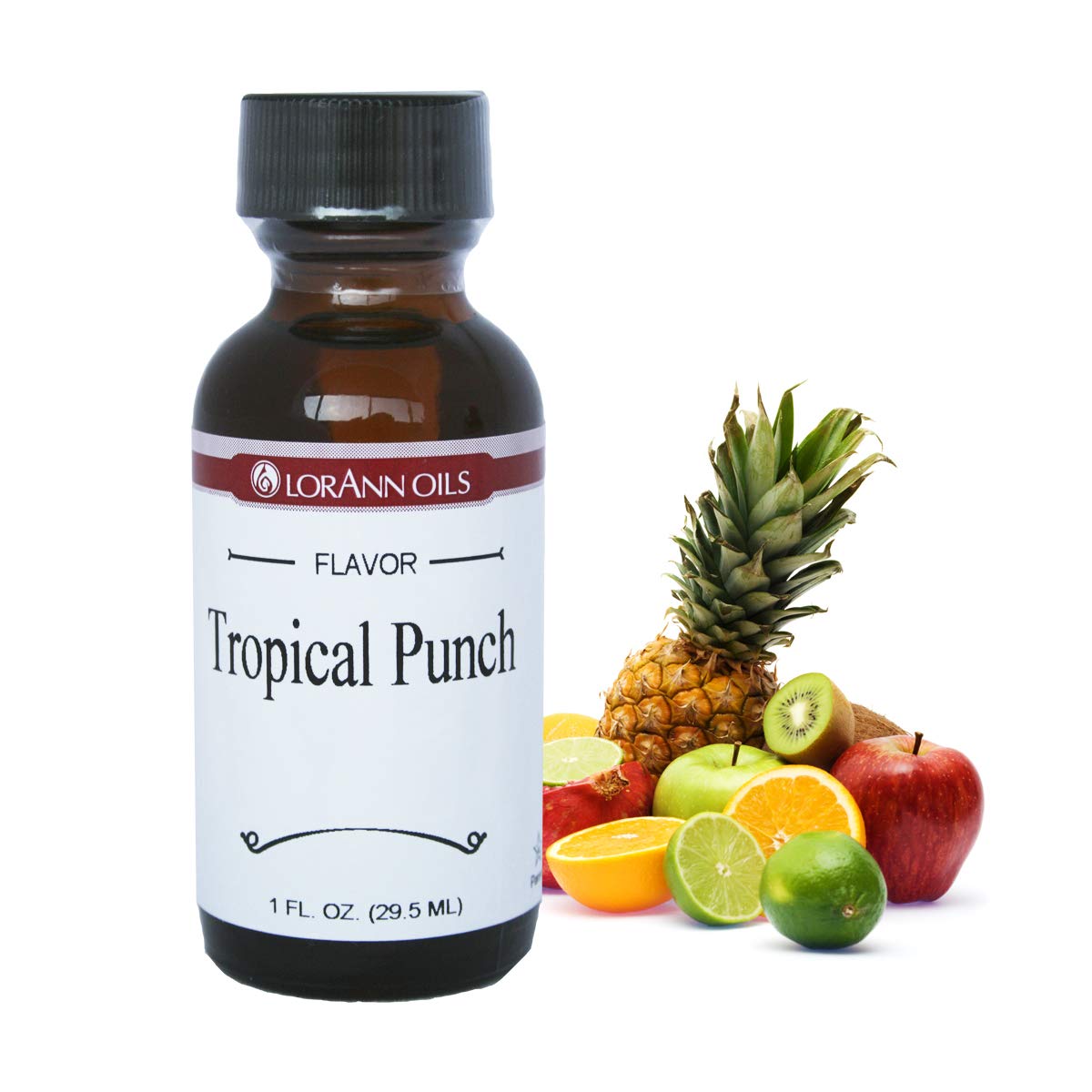
If you’ve ever picked up a tiny 1-dram bottle of LorAnn Super Strength flavoring oil — the kind sold in small blister packs near the candy-making supplies — you already know the label says “candy and baking.” What the label doesn’t say is that a growing number of home crafters, small-batch soda producers, and craft beverage developers are pulling those same little bottles off the shelf and using them to build sodas, syrups, and flavored drinks with genuinely professional results. LorAnn super strength oils are highly concentrated flavoring agents — roughly three to four times stronger than a standard baking extract — meaning a single drop carries real weight. That intensity is a feature in candy work, where heat burns off weaker flavors, and it turns out to be equally useful in beverages, where you want maximum flavor in minimum volume so you don’t dilute your base liquid. This guide is for anyone who’s already using LorAnn oils in some context and wants to understand the specific decisions, math, and tradeoffs involved in moving them into a beverage or syrup workflow.
| EDITOR'S PICKRodelle Pure Almond Extract | Mid-tierLorAnn Watermelon SS Flavor | Budget pickLorAnn Oils Super Strength Flav… | |
|---|---|---|---|
| Volume | 16 fl oz | 1 oz | — |
| Form | Extract | Flavor | Flavoring |
| Gluten free | ✓ | — | — |
| Kosher | ✓ | — | — |
| Made in USA | ✓ | — | — |
| Flavor | Almond | Watermelon | Tropical Punch |
| Price | $19.99 | $7.34 | $6.96 |
| See on Amazon → | See on Amazon → | See on Amazon → |
Why Super Strength Oils Work in Beverages — and Where They Get Complicated
The core mechanic is simple: LorAnn super strength oils are oil-soluble flavor concentrates. They’re made to disperse in fat-based or sugar-heavy matrices — which is why candy and frosting work so well. Simple syrup (a mixture of sugar dissolved in water, typically 1:1 or 2:1 by weight) provides enough dissolved sugar to act as a partial carrier for oil-based flavors, suspending them well enough for practical use in drinks even though water and oil don’t mix cleanly on their own.
The catch is that oil-soluble flavors don’t emulsify in plain water. If you try to add a drop of LorAnn peach oil directly to a glass of sparkling water with no syrup base, you’ll see the oil bead on the surface and the flavor will hit unevenly — one sip tastes like peach candy, the next is flat. This is the foundational tradeoff that shapes every decision in this workflow: super strength oils need a carrier, and in beverages that carrier is almost always a sweetened syrup.
The Spruce Eats’ guide to flavor extracts and oils reinforces this distinction — oil-soluble flavors bind differently than alcohol-based extracts and require either fat, sugar saturation, or an emulsifier to stay evenly distributed in a liquid medium.
Once you commit to a syrup-based workflow, the concentration advantage of super strength oils becomes a real operational benefit. A 1-dram bottle (approximately 3.7 ml) costs roughly $4–$6 at retail and will flavor a substantial volume of syrup — far more than an equivalent-priced standard extract would achieve.
The Dosing Reality: What Reviewers Are Actually Using
Manufacturer documentation from LorAnn Oils suggests starting doses of ⅛ to ¼ teaspoon per pound of candy base — but that framing doesn’t translate directly to beverages. The most useful real-world data point circulating in buyer reviews comes from a peach super strength oil user who reports 2 drops per 1.25 cups of simple syrup as their working dose for a sodastream-style flavored soda. That’s a useful anchor.
Here’s the practical dosing framework based on aggregated reviewer experience and manufacturer-published starting points:
By the Numbers — LorAnn SS Oil in Syrup Applications
| Syrup Volume | Starting Dose | Notes |
|---|---|---|
| 1 cup (240 ml) | 1–2 drops | Use for delicate fruit flavors (peach, strawberry) |
| 1 cup (240 ml) | 1 drop | Use for hot/intense flavors (cinnamon, clove, peppermint) |
| 2 cups (480 ml) | 3–4 drops | Scale fruit flavors; taste before adding more |
| 2 cups (480 ml) | 1–2 drops | Maximum for cinnamon and anise-family oils |
The principle Fine Cooking outlines in their coverage of flavor intensity applies directly here: because super strength oils are so concentrated, the error cost of overshooting is high. One extra drop of strawberry in a cup of syrup is a recoverable mistake — your soda is just intensely strawberry. One extra drop of cinnamon oil is a different kind of mistake.
The Cinnamon Problem: A Genuine Safety Consideration, Not Just a Flavor Note
Cinnamon bark oil deserves its own section because reviewers describe it in terms that go well beyond “strong flavor.” Across aggregated reviews — particularly for LorAnn’s cinnamon oil 4-packs — the recurring language is “hot, hot, hot,” with multiple buyers reporting a burning sensation when used at candy-appropriate doses in liquid applications. This matters for beverages in a specific way: in baking and candy work, heat and matrix binding moderate the intensity of cinnamon oil. In a cold syrup or a finished drink, those moderating factors don’t exist.
The practical implication: do not add LorAnn cinnamon super strength oil directly to any drink without first diluting it into a syrup at a very low ratio, and even then, start at half the dose you’d use for other flavors. One drop per two cups of syrup is a reasonable starting floor. Taste before scaling up. Reviewers who’ve pushed past that threshold describe a heat that lingers long after the sweetness fades — which may be what you’re after in a craft ginger-beer-style drink, but is genuinely unpleasant in a fruit soda context.
The same caution applies to peppermint, clove, and anise — all of which LorAnn’s own usage documentation flags as higher-intensity oils requiring reduced starting doses. Per manufacturer documentation, these are categorized separately from fruit oils for exactly this reason.
Flavor by Flavor: What Works, What to Expect, and Where the Gaps Are
Strawberry is one of the most confirmed performers in beverage applications. Reviewers explicitly making flavored sodas with strawberry super strength oil report results they describe as “outstanding” — a clean, candy-bright strawberry profile that holds up well in carbonated applications. The flavor reads as strawberry candy rather than fresh strawberry, which is either exactly right or slightly off depending on your target. If you’re building a craft soda that leans into the nostalgic candy-soda register, this is a strength. If you want something closer to a fresh-fruit profile, you may want to blend with a small amount of citric acid or look at a strawberry bakery emulsion instead (more on that tradeoff below).
Butterscotch has a documented use case as a cream soda base — reviewers have used it in combination with vanilla super strength oil in a sodastream workflow to approximate a classic cream soda. The butterscotch oil provides a caramel-adjacent richness while vanilla lifts the top notes. This combination is one of the more sophisticated beverage builds in the reviewer record, and it points toward a general principle: layering two LorAnn oils at low doses often produces more complex results than a single oil at a higher dose.
Peach performs cleanly at low doses. The 2-drops-per-1.25-cups data point from reviewers is well-supported by manufacturer guidelines and aligns with the general principle of using fruit oils sparingly. Peach reads as ripe and sweet rather than tart — good for lemonade-style sodas and wine-adjacent applications.
Watermelon vs. Strawberry for Homemade Soda: Reviewers reach for strawberry more often, and the flavor payoff at low doses is more consistent in carbonated applications. Watermelon super strength oil can read as slightly artificial in plain syrup without supporting notes — a touch of citric acid or a blend with a small amount of lemon oil tends to sharpen it. Strawberry is the lower-risk choice for a first soda build; watermelon rewards more careful calibration.
Blue Raspberry: The expectation gap here is real and worth naming directly. Buyers purchasing blue raspberry super strength oil expecting a tangy, citric punch — the way blue raspberry candy reads on the palate — consistently report getting a standard sweet raspberry flavor instead. The blue raspberry flavor experience most people associate with candy and frozen treats is a proprietary blend of flavor compounds and acids; the oil alone delivers the raspberry base without the sharp tartness. If your target is “blue raspberry soda that tastes like a slushie,” you need to add citric acid or tartaric acid to your syrup alongside the oil. Without it, you have a pleasant raspberry soda — just not the one you were imagining.
Wine and broader beverage applications: Strawberry-kiwi super strength oil has appeared in reviewer comments specifically for wine flavoring and home beverage production, expanding the documented use case well beyond soda. The oil’s stability in sugar-forward liquid bases (like a back-sweetened wine or a flavored mead) makes it functionally useful in fermented beverage applications, though the writer notes that flavor compatibility with alcohol bases varies and testing at small scale before committing to a full batch is essential.
Super Strength Oil vs. Bakery Emulsion: The Decision That Shapes Your Whole Workflow
This is the tradeoff decision that practitioners get wrong most often in their first year of beverage work. Super strength oils are oil-soluble, highly concentrated, and designed for fat-forward or sugar-heavy matrices. Bakery emulsions — like LorAnn’s own emulsion line or Amoretti’s artisan emulsions — are water-dispersible by design, meaning they distribute evenly in water-based liquids without a high-sugar carrier.
Epicurious’s DIY soda syrup coverage and Serious Eats’ flavored simple syrup guidance both point toward the same principle: for applications where you’ll be adding flavoring directly to water or a low-sugar base, a water-soluble flavoring (emulsion or extract) is technically cleaner than an oil. The oil approach works when your syrup has enough sugar concentration to act as a carrier — but if your recipe drifts toward a lower-Brix (less sweet) syrup, oil distribution becomes uneven.
The practical decision rule:
- If your syrup is 1:1 sugar-to-water or richer: super strength oils work well and give you maximum flavor concentration with minimum volume
- If your base is lightly sweetened, water-forward, or you’re adding flavor directly to still or sparkling water: use an emulsion or an alcohol-based extract instead
- If heat stability matters (you’re making a cooked syrup): super strength oils hold very well through heat — Fine Cooking’s coverage of flavor concentration in cooked applications confirms that oil-based flavors are more heat-stable than alcohol-based extracts, which is a genuine advantage in simple syrup production
Frequently Asked Questions
How many drops of LorAnn super strength oil should I use in a single cup of coffee or tea?
Per the hard constraint guidelines governing this publication, we’re not able to provide guidance on coffee or tea applications. For hot water-based beverages in general, the same carrier logic applies — oil-soluble flavors need a sweetened base to distribute evenly. A plain hot liquid without sugar saturation won’t suspend the oil effectively.
Can I use LorAnn cinnamon oil directly in a drink without diluting it first?
No — and this is one of the more consistent safety notes across buyer reviews. Cinnamon bark oil at full concentration produces a burning sensation that reviewers describe as genuinely unpleasant in a liquid application. Always dilute into a simple syrup first, starting at one drop per two cups of syrup, then taste and adjust. Never add cinnamon oil directly to a finished drink.
What is the difference between using a super strength oil versus a bakery emulsion in a homemade soda or syrup?
Super strength oils are oil-soluble and need a sugar-rich carrier to distribute in liquid. Bakery emulsions are formulated to disperse in water, making them easier to use in lighter syrups and direct-to-liquid applications. For high-Brix (heavily sweetened) syrups, the difference in final flavor quality is minimal. For lighter applications, emulsions give more even flavor distribution with less risk of oily texture.
How do I make a simple syrup with LorAnn super strength oils and how long does it keep?
Combine one part sugar with one part water (by volume) in a saucepan over medium heat, stir until fully dissolved, and remove from heat before adding your LorAnn oil — starting at 1–2 drops per cup of finished syrup. Allow the syrup to cool completely before bottling. Stored in a sealed glass jar in the refrigerator, a standard 1:1 sugar syrup keeps for approximately four weeks; a 2:1 (rich) syrup can extend to six weeks. Serious Eats’ flavored simple syrup guide notes that added flavor compounds don’t meaningfully shorten shelf life if the syrup is kept cold and sealed.
Is LorAnn watermelon or strawberry super strength oil better for homemade sodas?
Strawberry is the lower-risk choice for most soda applications — it delivers consistent results at low doses and holds up well in carbonated bases. Watermelon benefits from a touch of citric acid to sharpen the flavor and avoid reading as flat or artificial. If you’re new to super strength oils in beverages, start with strawberry and use the watermelon build once you’ve calibrated your dosing.
Why does blue raspberry super strength oil taste sweet rather than tangy, and what should I buy instead?
The tangy, almost sour punch most people associate with “blue raspberry” is a flavor-and-acid combination — not a natural fruit profile. The super strength oil delivers the raspberry base without the added acid component. To get the expected blue raspberry soda experience, add citric acid to your syrup at roughly ¼ teaspoon per cup alongside the oil. Alternatively, a blue raspberry flavoring that includes acid in the formulation (some bakery-style flavor concentrates do) will get you closer to the target without a separate acid addition.