If you’ve ever stood in a grocery store aisle comparing a $4 bottle of McCormick Pure Vanilla Extract against a $28 bottle from a specialty brand and wondered whether the difference is real or just marketing — this article is for you. A “pure extract” (as opposed to an “imitation” or “artificial” flavoring) is made by macerating a real flavor source — vanilla beans, almonds, peppermint leaves — in an alcohol-and-water solution, then straining it. The word pure has a legal meaning here: the U.S. Food and Drug Administration’s Code of Federal Regulations, Title 21, Section 169.175 defines minimum standards for what can call itself pure vanilla extract, for example, including a floor on how many vanilla beans must be used per gallon of liquid. McCormick is the dominant retail player in this category, sold in virtually every U.S. grocery outlet, and their lineup spans vanilla, almond, peppermint, lemon, and a handful of other flavor families. What this guide will do is decode the actual concentration numbers, explain where heat destroys flavor compounds and where it doesn’t, and give you a clear framework for deciding when a specialty brand is worth the upgrade — and when McCormick is genuinely the right call.
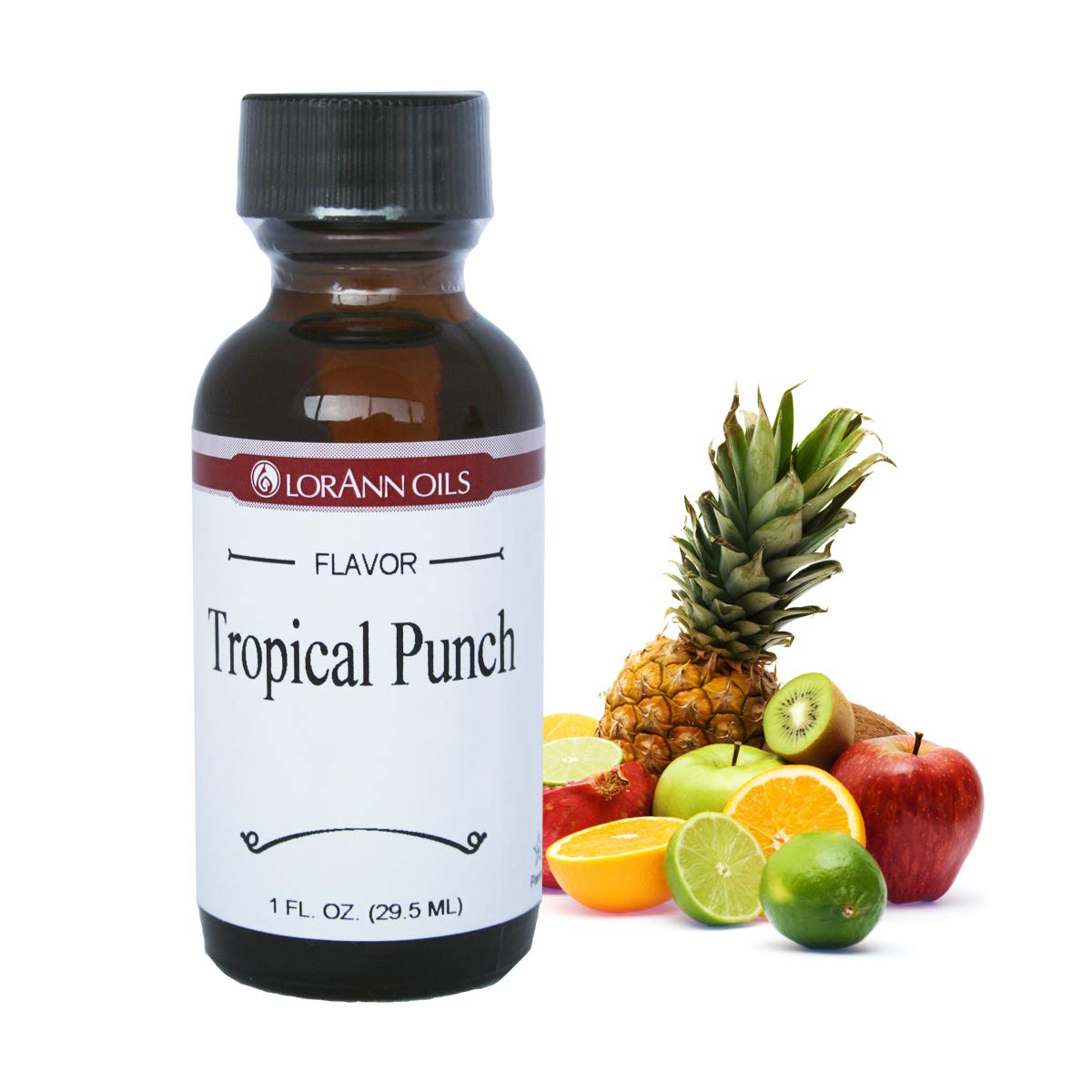
| EDITOR'S PICK[LorAnn Oils Super Strength Flav…](https://www.amazon.com/dp/B005BZ9X8Y?tag=greenflower20-20) | Mid-tier[McCormick Cake Batter Flavor](https://www.amazon.com/dp/B000B6MU74?tag=greenflower20-20) | Budget pick[McCormick Strawberry Extract Wi…](https://www.amazon.com/dp/B000B6MU6U?tag=greenflower20-20) | |
|---|---|---|---|
| Concentration | 4X stronger | — | — |
| Flavor type | Tropical Punch | Cake Batter | Strawberry |
| Volume | — | 2 fl oz | 1 fl oz |
| Natural flavors | ✓ | — | ✓ |
| Price | $6.96 | $6.49 | $2.32 |
| See on Amazon → | See on Amazon → | See on Amazon → |
What the Concentration Numbers Actually Mean
Concentration in flavoring extracts is expressed in a few ways depending on the source material, and McCormick doesn’t always make this easy to compare. For vanilla specifically, the FDA standard requires that pure vanilla extract contain the soluble components of at least 13.35 ounces of vanilla beans per gallon of finished extract — this is called “single-fold” or “1x” concentration. McCormick’s standard retail Pure Vanilla Extract meets this minimum. Their Pure Vanilla Extract in the 1 oz and 2 oz retail bottles is 1x.
That matters in practice because some specialty brands — Nielsen-Massey, Heilala, and a few others — offer 2x or even higher-fold extracts, meaning you use half the volume for the same flavor intensity. The Spruce Eats notes in their vanilla overview that fold-strength variation is one of the most commonly misunderstood sources of “why didn’t my recipe work” complaints from home bakers. If you switch from McCormick 1x to a 2x concentrate without adjusting your recipe, the flavor will read as aggressively strong.
McCormick’s non-vanilla extracts — almond, peppermint, lemon, and anise — work differently because there’s no FDA fold-standard for those flavor families. Instead, concentration is loosely inferred from ingredient order and the dilution ratio. McCormick Pure Almond Extract, for instance, lists bitter almond oil as an active component in an alcohol carrier. The concentration is low enough that most recipes call for ¼ to 1 teaspoon — any more and the extract goes from “marzipan-adjacent” to “sunscreen.” Fine Cooking’s archive on extracts and flavorings notes this narrow usage window is characteristic of almond oil-based extracts across brands, not a McCormick-specific quirk.
By the numbers — McCormick Pure Extract lineup snapshot:
| Extract | Primary Flavor Source | Typical Use Rate | FDA “Pure” Standard? |
|---|---|---|---|
| Pure Vanilla | Vanilla bean extractives | 1 tsp per recipe | Yes (1x fold minimum) |
| Pure Almond | Bitter almond oil | ¼–½ tsp | No fold standard |
| Pure Peppermint | Peppermint oil | ¼–½ tsp | No fold standard |
| Pure Lemon | Lemon oil | ½–1 tsp | No fold standard |
| Pure Anise | Anise oil | ¼–½ tsp | No fold standard |
Heat Stability: Where McCormick Holds Its Own and Where It Doesn’t
Heat is the single biggest variable that separates “extracts that survive the oven” from “extracts that ghost your finished product.” The relevant chemistry is straightforward: alcohol-based extracts rely on volatile aromatic compounds that begin to off-gas at temperatures above roughly 170°F (77°C). Baking most goods at 325–375°F means the surface temperature of your batter rises well past that threshold. Some flavor compounds survive this; others evaporate almost entirely.
McCormick Pure Vanilla Extract’s flavor profile in high-heat applications is well-documented in comparative coverage. Cook’s Illustrated’s vanilla tasting notes, which evaluated pure extracts across brands, observed that single-fold vanilla extracts (including McCormick’s) showed measurable flavor loss in baked goods compared to their raw-batter performance — but that the remaining flavor profile remained clean and balanced. The takeaway there is important: McCormick doesn’t fail in the oven, it just fades. Serious Eats’ vanilla extract review reached a similar conclusion, noting that tasters found McCormick performed reliably in heavily flavored or moist applications (custards, puddings, ice cream bases) but was less distinguishable in lean baked goods like shortbread where vanilla is the primary flavor note.
For McCormick’s non-vanilla extracts, the heat story is less forgiving. Peppermint and lemon extracts are almost entirely volatile — the compounds responsible for their brightness are among the first to evaporate. Bakers who’ve worked with peppermint extract in candy applications report (across long-run reviews on confectionery forums) that extract-based peppermint produces flat or medicinal results in pulled or cooked sugar above 280°F. The professional workaround — and this is where specialty alternatives earn their place — is to use LorAnn Oils’ concentrated peppermint oil or Boyajian’s citrus oils, which are pure essential oils without alcohol carrier, designed specifically to survive high-heat candy and baking applications.
McCormick Pure Almond Extract is the outlier here. Because its active compound (benzaldehyde, derived from bitter almond oil) has a relatively high boiling point compared to menthol or citrus terpenes, it retains meaningful flavor through moderate baking temperatures. This is part of why almond extract survives in pound cake, financiers, and amaretti cookies in a way that peppermint or lemon extract simply doesn’t.
Where McCormick Is the Right Answer
Before leaning into the “when to upgrade” section, it’s worth being direct: McCormick is the correct purchase for a significant range of applications, and defaulting to specialty brands for everything is an expensive habit that doesn’t always improve results.
McCormick works well when:
- The recipe is moisture-rich and low-heat. Cream cheese frosting, no-bake cheesecake, pastry cream, ice cream, cold-process buttercream — these are McCormick’s best-case scenarios. The alcohol carrier contributes to dispersion, there’s no heat to drive off the volatiles, and the flavor compounds stay intact.
- Vanilla is a supporting note, not the headline. Chocolate cake, spiced muffins, or anything with a competing primary flavor gets diminishing returns from a premium vanilla. Cook’s Illustrated’s tasting notes confirm that tasters couldn’t distinguish between premium and standard extracts in chocolate-heavy applications.
- You’re scaling a recipe for high-volume production at a margin-constrained price point. For cottage kitchen operators making flavored shortbread for farmers market sales, the cost-per-use math strongly favors McCormick: a 4 oz bottle at roughly $7–$9 retail (mid-2026 pricing) yields approximately 24 teaspoon-sized servings, putting unit flavor cost under $0.40. Nielsen-Massey’s pure vanilla at $22–$28 for the same volume cuts your margin on every unit. That difference is only justified if the flavor difference is detectable in your finished product — and for many applications, it isn’t.
- Lemon or almond flavor is a secondary accent. In a blueberry muffin where lemon is a background note, McCormick Pure Lemon Extract performs identically to more expensive options because you’re using ½ tsp, not 1 tablespoon.
When to Upgrade — and to What
This is the actual decision frame, stated cleanly:
Upgrade from McCormick vanilla when: The finished product is baked lean and hot, vanilla is the primary flavor note, and you’re charging for it or entering it in a context where the flavor story matters. The upgrade tier here is Nielsen-Massey Pure Vanilla Extract (1x, Bourbon beans, approximately $22–$28 for 4 oz) or Heilala Pure Vanilla Extract (single-origin Tonga, approximately $18–$25 for 3.4 oz), both of which reviewers at Serious Eats and Cook’s Illustrated consistently rate as having more complex, floral aromatic profiles than McCormick’s cleaner-but-simpler 1x. If you’re pushing vanilla as a flavor signature — vanilla-forward shortbread, vanilla bean caramels, vanilla crème brûlée — the upgrade pays for itself in product differentiation.
Upgrade from McCormick peppermint or lemon when: You’re working in candy applications above 250°F, flavoring hard candies, or producing a craft soda or beverage where the citrus note needs to read bright and true. The replacement is not a more expensive extract — it’s a different product category. LorAnn Oils Super-Strength Peppermint Flavor (1 dram, approximately $4–$6) is a concentrated oil-based flavor rated for candy cooking temperatures. Boyajian Pure Lemon Oil (approximately $12–$18 for 5 oz) is cold-pressed from citrus rind and designed for high-heat and high-concentration use. These are not upgrades in the luxury sense; they’re category switches for applications where extract chemistry simply doesn’t survive.
Upgrade from McCormick almond when: You’re producing a confection where almond reads as the primary flavor, like a marzipan filling, or you want to move to an alcohol-free format. OliveNation’s pure almond extract offers a higher-concentration alternative at approximately $15–$22 for 4 oz that reviewers note produces a more rounded, less sharp profile than the standard retail bottles. For candy-grade work, LorAnn’s Almond Bakery Emulsion (an emulsion format, not an oil or extract) is designed to hold up in baked goods where alcohol would evaporate — operators in long-run bakery reviews report more consistent flavor carry-through in cookies and quick breads compared to standard extract.
If you’re a specialty food entrepreneur scaling a product line, the decision rule simplifies even further: use McCormick for recipe development and testing (low cost, easy to source anywhere, reproducible baseline), then benchmark against your target specialty brand before locking in a formula. Flavor profiles between batches of McCormick are highly consistent due to their large-scale production standardization — which is actually a genuine advantage at the development stage, even if it’s not why enthusiasts love them.
The Shelf Life Question
One practical factor that rarely appears in flavor guides but genuinely affects cost-per-use: McCormick Pure Vanilla Extract, like all alcohol-based extracts, has an effectively indefinite shelf life when stored properly (sealed, cool, away from direct light). The FDA sets no expiration requirement for pure extracts, and McCormick’s own consumer documentation confirms their pure extracts carry a “best by” date, not an expiration date — flavor potency may decrease over time but the product won’t spoil. This is relevant because large-format purchases (4 oz and up) are economical only if you’ll use the product consistently. A home baker using 1 teaspoon every two weeks will not meaningfully degrade a 4 oz bottle over 18 months. A specialty food entrepreneur going through 2 oz a week needs a different purchasing cadence regardless of brand.
The shelf life advantage is similar across McCormick’s non-vanilla line — all are alcohol-based, all store well. The Spruce Eats’ extract overview confirms this storage profile is standard for the category, not unique to McCormick.
The Decision Frame, Condensed
If your application is cold, moist, or vanilla-as-supporting-note: McCormick is the right call. If your application is high-heat candy or you need peppermint or citrus to survive cooking temperatures: switch product categories to a concentrated oil or emulsion, not just a pricier extract. If vanilla is your flavor headline in a lean baked product and you’re charging for it: Nielsen-Massey or Heilala earns the premium. If you’re in active recipe development and need a stable, reproducible baseline: McCormick is actually the strategically smart starting point before you commit to a more expensive specialty supplier.
The McCormick lineup isn’t a placeholder until you know better. For most applications, most of the time, it’s a competent, reliable product that’s been unfairly dismissed because “grocery store brand” triggers a premium-brand reflex. The skill is knowing exactly which five percent of your applications genuinely demand the upgrade — and spending your sourcing budget there.