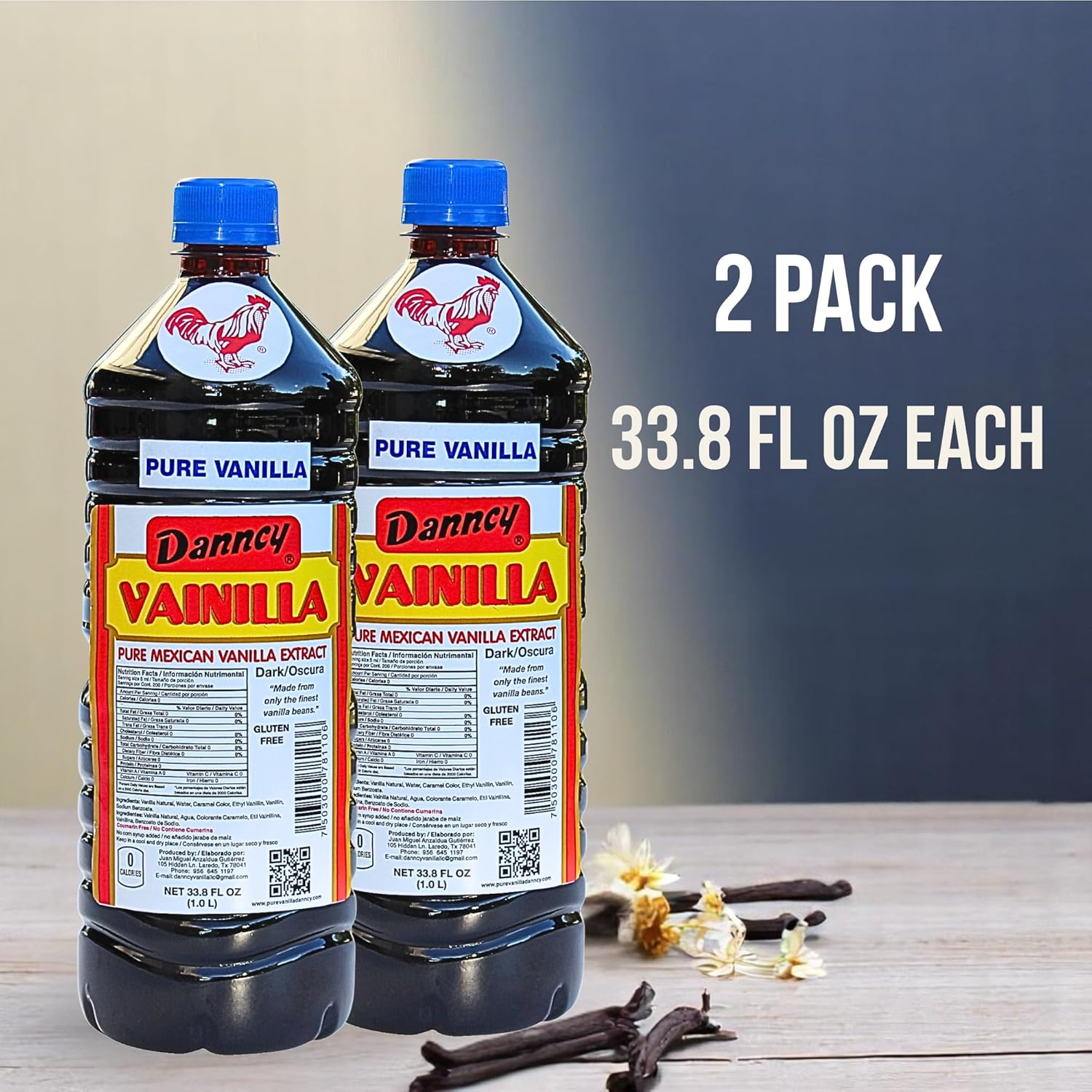
If you’ve ever grabbed a bottle of Mexican vanilla at a border market or a tourist shop and noticed it smells almost too good to be true — sweeter, creamier, more perfume-like than the extract you use at home — you were picking up on a real chemical difference, not just marketing. Mexican vanilla and Madagascar Bourbon vanilla (the “Bourbon” here refers to the old name for Réunion Island, where a particular vanilla variety was historically cultivated, not the whiskey) are sourced from the same plant species, Vanilla planifolia, but they diverge sharply in flavor chemistry, regulatory status, and how they hold up under oven heat. Madagascar Bourbon is the global workhorse — mild, creamy, and consistent. Mexican vanilla is richer and more complex at room temperature, but it comes with a significant asterisk that every small-batch producer and cottage-kitchen operator should understand before writing it into a formula. This guide lays out the tradeoffs clearly so you can make the call with confidence.
The Flavor Difference Is Real — and It’s Not Just Terroir
Both origins deliver the core vanillin compound that makes vanilla taste like vanilla. The gap between them lives in the supporting cast.
Madagascar Bourbon: The Predictable Workhorse
Madagascar Bourbon vanilla is dominated by vanillin — the primary aromatic aldehyde responsible for that clean, sweet, creamy note — with secondary compounds including p-hydroxybenzaldehyde, which rounds out the profile without competing for attention. Serious Eats, in their overview of vanilla extracts (“The Best Vanilla Extract,” seriouseats.com), describes the Madagascar profile as “sweet and creamy, almost like a classic vanilla ice cream” — reliable, neutral-leaning, and designed to enhance rather than lead. In custards, buttercreams, and any application where vanilla is meant to support chocolate or fruit, Madagascar Bourbon stays in its lane. That’s a feature, not a flaw.
 product image](/images/external/781e8e662e65.jpg)
Danncy
$24.99
In stock on Amazon
Check price on AmazonMexican Vanilla: Complex at Room Temperature
Mexican vanilla’s profile includes higher concentrations of coumarin (more on that shortly) along with a broader range of phenolic compounds and a naturally smokier, woodsier, slightly spiced undertone. Nielsen-Massey Vanillas, in their single-origin flavor documentation (“Single-Origin Vanilla: Flavor Profiles and Applications,” manufacturer technical documentation), describes their Mexican vanilla as having “a creamy, smooth taste with a spicy, woody character” distinct from the Bourbon standard. At room temperature — in no-bake fillings, cold frostings, pastry cream, or beverages — that complexity is genuinely valuable. It reads as more sophisticated, more layered.
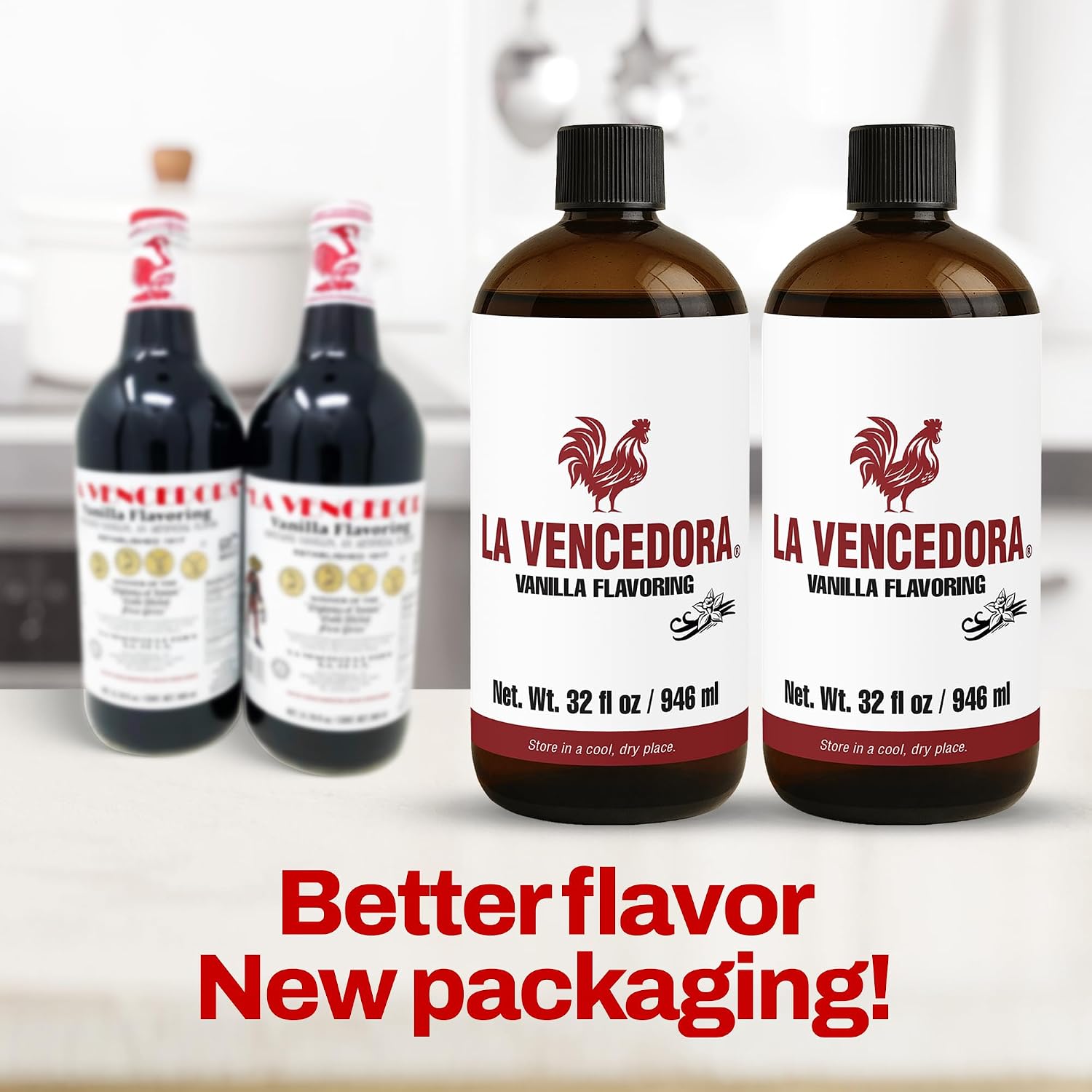
La
$34.95
In stock on Amazon
Check price on AmazonChoosing by Application: The Core Rule
The practical upshot is this: Mexican vanilla has more character; Madagascar has more predictability. For an artisan bakery owner building a house flavor profile, that distinction matters enormously. But character only counts when your process preserves it — which leads directly to the heat question.
Danncy
$24.99
In stock on Amazon
Check price on AmazonHeat Stability: Where Madagascar Pulls Ahead
Here’s the tradeoff that catches many intermediate producers off guard. Vanilla flavor — from any origin — degrades under heat. But the rate and character of that degradation differ between Mexican and Madagascar.
Vanillin itself is relatively heat-stable up to temperatures around 200–250°F (93–121°C) in aqueous or fatty matrices. The problem with Mexican vanilla is that many of its secondary complexity compounds — including those phenolics responsible for the woodsy-spicy character — volatilize at lower temperatures. Heilala Vanilla, in their baking guidance (“Baking with Vanilla: Understanding Heat and Flavor Loss,” manufacturer product guidance), notes that high-heat applications “reduce the perceptible complexity of vanilla,” and this effect is more pronounced when the profile depends on volatile compounds beyond vanillin.
Cook’s Illustrated’s vanilla extract buying guide (“Which Vanilla Extract Should You Buy?,” cooksillustrated.com) found that in high-heat applications like yellow cake baked at 350°F, tasters had more difficulty distinguishing between premium and standard extracts — and between origins — because heat drove off the volatile aromatics that separate them. What remained was primarily vanillin, which both origins deliver in comparable quantity.
What this means for your production decisions:
- Cookies, cakes, muffins, quick breads (325–375°F): The advantage of Mexican vanilla’s complexity largely evaporates. You’re paying a premium for a profile that the oven erases.
- Candy and confectionery (above 300°F / 149°C sugar work): Madagascar Bourbon, or better yet a pure vanilla powder or paste specifically rated for heat stability, is the better call. The alcohol carrier in liquid extracts flashes off rapidly; the remaining flavor compounds from Mexican vanilla suffer disproportionate loss.
- No-bake and low-heat applications (custards, cold fillings, beverages, no-bake cheesecakes, pastry cream held below 185°F): Mexican vanilla earns its price here. The complexity survives. Both Nielsen-Massey and Heilala position their Mexican-origin products explicitly toward cold and low-heat end uses.
Heat Stability Comparison by Application
| Application | Recommended Origin | Key Reason | Tier |
|---|---|---|---|
| High-heat baking (>325°F) | Madagascar Bourbon | Vanillin-forward; complexity survives heat better | Danncy — $24.99 |
| Candy / sugar work (>300°F) | Vanilla paste or powder, Madagascar | Liquid carriers flash off; need heat-stable format | Danncy 1L — $22.89 |
| No-bake fillings, cold frosting | Mexican vanilla | Complex phenolics survive; spicy-smoky note shines | La — $34.95 |
| Beverages, syrups, cold applications | Either; Mexican for premium positioning | Profile intact; choose by flavor target | Danncy — $24.99 |
The Coumarin Question: What It Is and Why It Matters for Producers
This is the part of the Mexican vanilla conversation that gets glossed over in food blogs but shouldn’t be in a production context.
Coumarin is a naturally occurring aromatic compound found in many plants — tonka bean, sweet woodruff, and, at varying concentrations, some vanilla beans and extracts from Mexico. It contributes a sweet, almost vanilla-adjacent aroma at low levels. At higher concentrations it develops a hay-like or even medicinal edge. The regulatory issue is not the flavor — it’s the toxicity data.
The U.S. Food and Drug Administration, in its documentation on coumarin in foods (FDA, Center for Food Safety and Applied Nutrition, “Coumarin: FDA’s Action on Coumarin in Foods,” fda.gov), classifies coumarin as a substance that is not generally recognized as safe (GRAS) as a food additive in the United States. This is a longstanding position; the FDA restricted coumarin in food flavoring in the 1950s based on animal studies showing hepatotoxicity (liver damage) at high doses.
Here’s the practical nuance: naturally occurring coumarin in genuine vanilla beans exists at low levels and is not the source of the regulatory concern. The problem historically associated with cheap Mexican vanilla sold in tourist markets was the use of tonka bean extract or synthetic coumarin as a flavor booster — a practice that could produce coumarin concentrations far above what genuine vanilla beans contain. The FDA has issued import alerts on specific Mexican vanilla products on this basis.
For producers and formulators, the decision framework is:
- Source matters more than origin label. A reputable supplier — Nielsen-Massey, Heilala, or a documented food-grade vanilla vendor — tests their extract and can provide documentation. An unmarked tourist-market bottle cannot.
- If you’re selling finished products commercially, your formulation traceability requirements make sourcing from a documented supplier non-negotiable. An undocumented Mexican vanilla extract is an audit risk, not just a flavor risk.
- Pure vanilla extract, certified by origin and meeting FDA identity standards (at least 35% alcohol by volume, minimum 13.35 oz vanilla beans per gallon), contains naturally occurring coumarin at levels that current evidence does not flag as a dietary concern at normal consumption rates. The regulatory issue is with added coumarin as a flavoring agent.
Cook’s Illustrated (“Which Vanilla Extract Should You Buy?,” cooksillustrated.com) and Serious Eats (“The Best Vanilla Extract,” seriouseats.com) both note that the safest approach for commercial producers is buying from vendors who publish their sourcing and testing documentation — and that applies to any vanilla origin, not just Mexican.
Cost-Per-Use Reality Check (2026 Market Context)
As of mid-2026, the vanilla market remains tight. Madagascar experienced supply pressure through the early 2020s; pricing has moderated somewhat but single-origin Madagascar Bourbon extract from premium brands still commands $18–$30 for consumer sizes (1–4 oz) and $60–$120 or more for professional-grade volumes. Mexican vanilla from documented sources runs in a similar range through specialty suppliers — the price advantage of cheap tourist-market product doesn’t translate to reputable commercial sourcing.
The cost-per-use math only shifts meaningfully if you’re buying bulk vanilla paste or powder for high-volume candy or baking operations, where heat-stable formats and concentration ratios change the economics. Vanilla paste typically runs 1:1 substitution with extract; powder is more concentrated, with most manufacturer guidance placing roughly 1 tsp powder as equivalent to 1 tsp extract, though this varies by brand.
For small-batch specialty producers: the real cost of the wrong origin isn’t the purchase price — it’s the reformulation cost when a heat-unstable profile underperforms in your hero SKU. Locking Mexican vanilla into a baked cookie formula before validating the flavor outcome at scale is the kind of decision that costs more to unwind than the original product investment.
If X, Then Y: The Decision Rules
After working through the flavor chemistry, heat behavior, and regulatory landscape, here’s the clean decision framework:
If your application is high-heat baking (above 300°F), use Madagascar Bourbon. The complexity you’re paying for in Mexican vanilla won’t survive the oven. For candy work, step up to vanilla paste or powder from a heat-rated source.
If your application is cold or low-heat — pastry cream, no-bake cheesecake, cold beverage syrups, frosting, or chilled confections — and you want a layered, slightly spicy profile, Mexican vanilla from a documented supplier is worth the investment. It’s genuinely different, and in those applications it stays different.
If you’re sourcing for a commercial production environment, require COA (Certificate of Analysis) documentation and supplier traceability from any vendor before locking in a formula, regardless of origin. For Mexican vanilla specifically, confirm no added coumarin or tonka bean derivation. Nielsen-Massey and Heilala are the names that consistently appear in professional sourcing discussions precisely because they publish this documentation.
If you’re not sure yet, Madagascar Bourbon is the lower-risk default. It’s forgiving across applications, well-documented, broadly available from professional-grade suppliers, and its profile is neutral enough that it won’t derail a formula while you’re still dialing in the rest of your flavor architecture. Add Mexican vanilla as a deliberate choice once you know exactly where it earns its place — not as a default substitution.
The two origins aren’t competing for the same job. Once you see them that way, the decision gets easy.