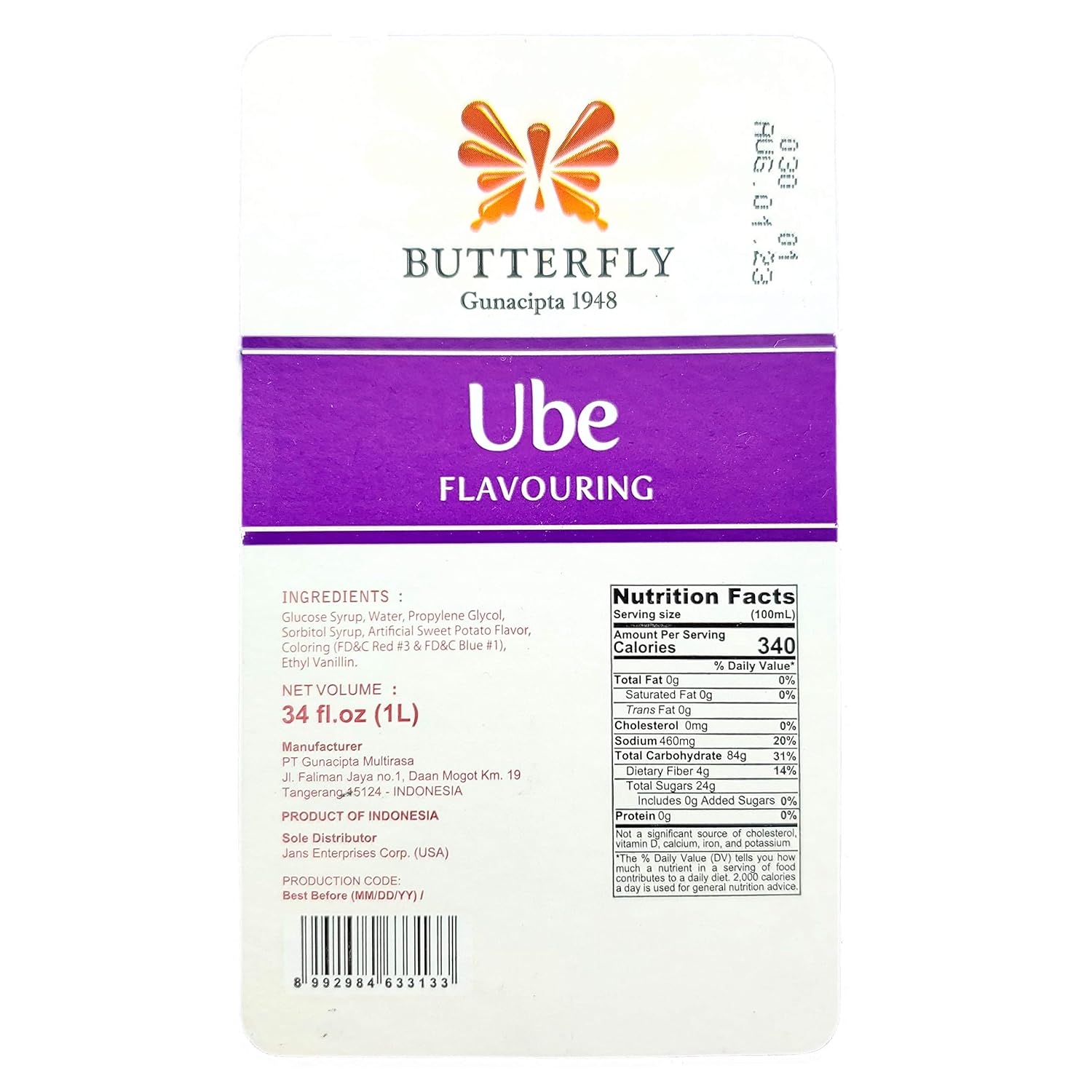
If you’ve been reaching for vanilla extract on autopilot and wondering whether you can do the same thing with lavender, peach, ube, or passion fruit — the honest answer is “yes, but the rules change.” A flavor extract is a concentrated solution of aromatic compounds dissolved in a carrier (usually alcohol, glycerin, or oil) that adds taste and smell to food without contributing bulk. Vanilla is forgiving: it’s been standardized for more than a century, and almost every brand plays by similar rules. The specialty extracts covered in this guide are a different story. Concentration levels vary wildly between suppliers, some forms survive baking heat and some don’t, and the line between a “natural extract” and a “flavor compound” matters a lot for label claims on a product you’re selling. This guide breaks down all four flavors — lavender, peach, ube, and passion fruit — so you can make a confident sourcing decision rather than an expensive experiment.
Lavender: The Concentration Problem Nobody Warns You About
Lavender is where most bakers first get burned — figuratively. The flavor compound responsible for lavender’s signature scent, linalool, is potent enough that even a small measurement error can push a baked good from “floral and elegant” into “soap bar.” This isn’t brand-specific; it’s chemistry. Per FEMA’s GRAS Flavor Ingredient Database (2024 update), linalool has an extremely low flavor threshold — meaning your palate detects it at concentrations far below what you’d measure in a tablespoon.
What that means for sourcing:
- Water-based lavender extracts (like those from OliveNation or Amoretti) typically run 1:1 usage rates in recipes — meaning the amount stated in a standard recipe assumes this dilution level. These are the safest starting point.
- LorAnn’s lavender flavoring oil is a super-strength concentrate. Per LorAnn’s own Flavoring Concentration and Usage Rate Guide (2024), their oils are formulated at roughly 3–4× the concentration of standard extracts, with a recommended starting rate of ⅛ to ¼ teaspoon per standard batch. Many recipe developers using these report needing to halve even that.
- Dried lavender vs. extract: Culinary lavender buds (Lavandula angustifolia, not decorative varieties) steep well in glycerin or neutral spirits for DIY tinctures, but the resulting strength is difficult to standardize batch-to-batch — a real liability if you’re scaling for a cottage bakery.
Heat stability: Linalool is moderately volatile. Serious Eats’ editorial review of baking extracts notes that floral compounds generally diminish with prolonged high heat, making lavender extracts better suited to no-bake applications, glazes, frostings, and fillings than to full bake-through items like pound cake. If you need lavender in a baked product, add it post-mix or use an emulsion form, which suspends the flavor compounds in a water-stable matrix that releases more gently.
Decision rule for lavender: If you’re selling baked goods, start with an Amoretti or OliveNation water-based extract at controlled concentration and document your usage rate per batch religiously. If you’re formulating beverages or confections, LorAnn’s oil offers better cost-per-use — but budget time for calibration batches before you commit to a production run.
Peach: Why “Natural” Labeling Gets Complicated Here
Peach is one of the trickier flavors to source authentically because the dominant aroma compound in real peaches — a lactone called γ-undecalactone — is expensive to extract naturally, so most “peach flavor” products on the market are either synthesized compounds or blends. This isn’t necessarily a quality problem; well-formulated peach flavors can taste genuinely fruit-forward and bright. But if your label says “natural flavors” or you’re marketing a clean-label product, you need to read supplier documentation carefully before assuming.
Sourcing tiers to know:
- LorAnn Peach Flavoring Oil ($4–$6): A synthetic compound formulation — effective for hard candies, gummies, and lip balms, but not appropriate for “natural” label claims. Heat stable up to candy-making temperatures (per LorAnn’s specification documentation), which is a genuine advantage.
- Amoretti Natural Peach Artisan Flavor ($28–$45 range): Labeled natural, water-soluble, and formulated for both baking and beverage applications. Amoretti’s 2025 catalog specifies this as cold-process stable and lists usage rates at approximately 1–2% by weight for beverage applications — helpful precision for craft soda developers.
- OliveNation Peach Extract ($12–$18): A mid-tier option that performs well in baked goods and icings based on aggregated purchasing reviews, though concentration documentation is less detailed than Amoretti’s.
- Flavor Apprentice Peach Flavor: A concentrate popular with DIY beverage formulators; reviewers in craft soda development communities consistently rate it as running hotter (more concentrated) than standard extracts, requiring usage rate adjustments.
By the numbers — peach formulation quick reference:
| Format | Approx. Usage Rate | Heat Stable? | Natural Label? |
|---|---|---|---|
| LorAnn oil (synthetic) | ⅛–¼ tsp / standard batch | Yes, to 300°F+ | No |
| Amoretti natural artisan | 1–2% by weight (beverage) | Moderate | Yes |
| OliveNation extract | 1 tsp / standard batch | Moderate | Check label |
| Flavor Apprentice concentrate | 0.5–1% by weight | Yes | Varies |
Substitution guidance: Fresh peach reduction (cooked-down purée) is a viable substitute in non-commercial applications — it adds color and some texture alongside flavor, which matters in pastry fillings. For commercial scale, there’s no clean 1:1 extract substitute; budget for proper sourcing.
Ube: Sourcing a Flavor With No Agreed Standard
Ube (purple yam, Dioscorea alata) went from a Filipino bakery staple to a trend ingredient in North American specialty food over roughly a 36-month period ending in 2025. The problem: because demand outpaced the specialty extract supply chain, the market filled with products ranging from authentic ube flavor concentrates to generic “purple vanilla” blends with artificial coloring added. Buyers sourcing ube flavoring for the first time should go in with skepticism.
True ube flavor is earthy, mildly sweet, and vaguely reminiscent of vanilla and taro — not aggressively sweet or one-dimensional. If a product smells primarily of vanilla and artificial grape, that’s a signal it’s a flavoring blend, not an ube-forward extract.
Sourcing landscape as of mid-2026:
- Amoretti Ube Artisan Flavor: Widely referenced by Filipino-American bakery operators as a reliable natural-leaning option. The 2025 Amoretti catalog describes it as water-soluble with a balanced “sweet potato and vanilla” flavor profile, suitable for fillings, frostings, and beverages.
- Flavorah Ube: A concentrate from a brand primarily serving the vape and craft beverage market; food-grade certified. Reviewers consistently note it reads as more authentically earthy than many competitors, but the concentration is high — reported usage rates start around 0.5% by weight, significantly lower than a standard extract.
- OliveNation Ube Extract: A more accessible entry-level option. Based on product specification language, it’s an alcohol-based extract rather than a concentrate, making usage-rate translation more intuitive for home bakers already working with vanilla or almond extracts.
The color question: Most ube-flavored products carry a distinctive purple color in finished goods, but this may come from added colorants (purple sweet potato color or synthetic dyes) rather than the extract itself. If color accuracy matters for your product, verify the extract’s color contribution separately from the flavor contribution — they’re not always bundled.
Heat stability for ube: The earthy, starchy flavor notes in authentic ube are relatively heat-stable compared to delicate floral or citrus compounds, per IFT’s Journal of Food Science analysis of flavor stability in high-heat applications (2023). This makes ube extract reasonably well-suited to baked goods, provided you’re using a water-soluble formulation that won’t break under high moisture.
Decision rule for ube: If you’re selling baked goods with an authenticity claim, Amoretti or a verified natural concentrate is worth the premium. If you’re experimenting at home with no label obligation, OliveNation’s extract is a lower-stakes starting point.
Passion Fruit: The Volatility Challenge for Beverage Formulators
Passion fruit’s flavor is built almost entirely on a group of highly volatile esters — compounds that evaporate quickly under heat and disperse rapidly in high-alcohol environments. This makes passion fruit one of the harder specialty flavors to work with in any application that involves heat or extended shelf life. It also makes it one of the most rewarding when you get it right, because the aroma is distinctive in a way that reads as premium to consumers.
Formats and their tradeoffs:
- Passion fruit purée vs. extract: Purée (frozen) delivers the most authentic flavor and is the standard in craft beverage development, per Bon Appétit’s formulation coverage of tropical drink ingredients. It’s not a direct extract substitute — it contributes liquid, acidity, and seeds — but for beverages and sauces, it’s often the better call.
- Amoretti Natural Passion Fruit Artisan Flavor: One of the more technically documented options; the Amoretti 2025 catalog lists this as emulsion-based for improved stability in high-water-activity environments. Emulsions suspend flavor compounds in a protein-stabilized matrix, making them less prone to volatilization than alcohol-based extracts — a meaningful advantage for passion fruit specifically.
- Capella Passion Fruit Flavor Concentrate: Popular with craft beverage formulators; operators working in functional beverage development report that it reads as brighter and more acidic than Amoretti’s version, which some prefer for seltzer and sparkling applications.
- OOO Flavors Passionfruit: A commercial concentrate primarily used in professional flavor formulation contexts; usage rates are high-concentration (typically under 1% by weight), and supplier relationships for consistent supply are important at production scale.
Shelf life note: Passion fruit extracts and concentrates are particularly sensitive to oxidation. Nielsen-Massey’s product specification documentation for their tropical line recommends refrigeration after opening for all alcohol-based extracts intended for delicate flavor applications — worth applying here regardless of brand. Manufacturers generally rate opened concentrate shelf life at 12–18 months refrigerated, but reviewers consistently note that the top-note brightness fades well before that in poorly sealed containers.
Substitution guidance: For passion fruit in a recipe where no extract is on hand, a 50/50 blend of mango and guava extracts will approximate the tropical top note, though the distinctively tart edge of real passion fruit won’t fully translate. This works in batters and frostings; it won’t fool anyone in a beverage.
Pulling It Together: If X, Then Y
Here’s the decision logic distilled, because you’ve got a batch to plan:
If you’re formulating baked goods and need a natural label: Amoretti’s artisan line covers all four flavors discussed here with reasonably transparent specification documentation. The cost-per-use math favors concentrates at scale — a $35–$45 bottle used at 1–2% by weight goes significantly further than a $15 extract used at 1 teaspoon per batch.
If you’re making hard candy or confections and heat stability is non-negotiable: LorAnn’s flavoring oils for peach and lavender are purpose-built for this application. Ube and passion fruit in candy applications require more careful sourcing — prioritize emulsion or oil-soluble formats over water-based extracts.
If you’re developing craft beverages: Prioritize emulsion formats over alcohol-based extracts for anything requiring extended shelf stability. Capella and Amoretti both produce beverage-grade emulsions in this flavor set. Purée is still the gold standard for passion fruit in any cold application.
If you’re experimenting before committing to a supplier: OliveNation and OOO Flavors both sell in smaller trial sizes before you buy production quantities, which is worth the per-unit premium when you’re calibrating a new flavor into an existing formula.
Concentration transparency is the variable that separates confident formulation from guesswork. Before any production commitment, request or download the spec sheet, confirm the usage rate in your specific application type (baked, beverage, confection), and run at least two calibration batches at different percentages. The flavor that’s been sitting in your cart waiting for a decision is ready when you are — just don’t skip the math.