If you’ve ever stood in front of a baking supply shelf holding a jar of vanilla bean paste in one hand and a bottle of vanilla extract in the other, wondering whether the paste is genuinely worth two to three times the price per ounce, you’re in good company. Vanilla extract is the liquid flavoring most bakers encounter first — made by soaking vanilla pods (the long, dark seed pods from the Vanilla planifolia orchid) in an alcohol-and-water solution until flavor compounds dissolve out. Vanilla bean paste is a thicker product that starts from a similar flavor base but adds real vanilla seeds — those tiny black specks you see in premium ice cream and pastry cream — suspended in a syrup or gel binder, usually alongside vanilla extractive or a concentrated vanilla base. Both products deliver vanilla flavor. What they don’t deliver equally is visual impact, texture contribution, heat behavior, and cost efficiency. This guide breaks down exactly where each format wins and gives you a clear decision rule whether you’re a home baker or sourcing for a small-batch production environment.
What’s Actually Inside Each Format (and Why It Changes Your Math)
The FDA’s Code of Federal Regulations Title 21, Part 169 — Food Dressings and Flavorings — sets the minimum standard for what can legally be called “pure vanilla extract” in the United States: at least 13.35 ounces of vanilla beans per gallon of extraction liquid, with an alcohol content of at least 35 percent by volume. That regulatory floor matters because it means not all pure extracts are equal. Brands that exceed the minimum — such as Nielsen-Massey’s double-strength Madagascar Bourbon extract, as documented in Nielsen-Massey Vanillas’ published product specification materials — are delivering meaningfully more extractive per teaspoon than a commodity single-fold product.
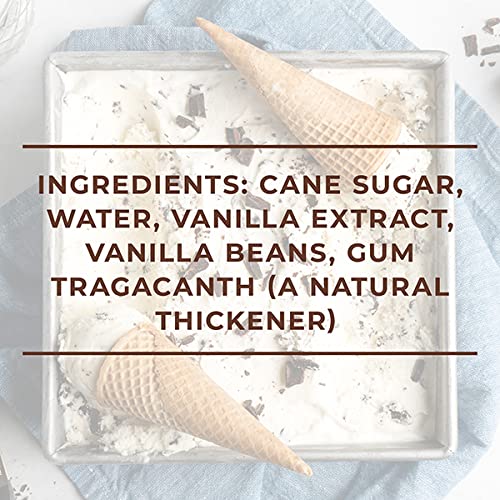
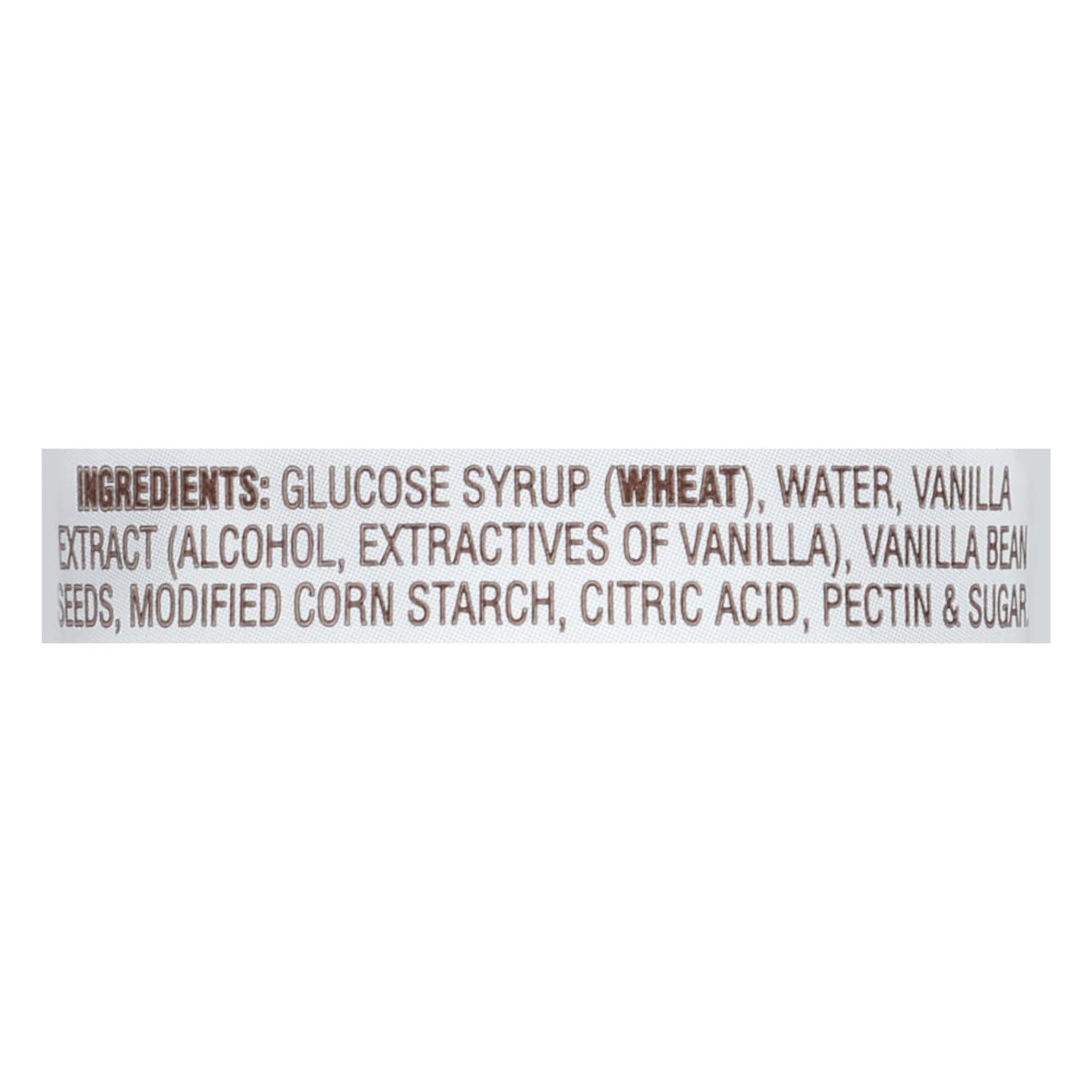
Vanilla bean paste is not subject to the same federal standard in the same way, which is one reason ingredient lists vary so widely across brands. A paste might be thickened with gum arabic, locust bean gum, or cane sugar syrup, and will typically include vanilla extractive, vanilla bean seeds, and sometimes vanilla powder. Nielsen-Massey Vanillas’ product specification documentation for their Madagascar Bourbon Pure Vanilla Bean Paste identifies the formulation as vanilla bean extractive, vanilla bean seeds, water, sugar, and natural thickener — representative of the mainstream category.
The concentration question is where practitioners get burned. Most vanilla bean pastes are formulated as a 1:1 substitution for pure vanilla extract by volume — one teaspoon of paste replaces one teaspoon of extract. But that equivalence assumes the paste’s extractive base is single-fold strength. Heilala Vanilla’s grower and product transparency report for their Tonga Vanilla Bean Paste notes a concentrated extractive base, which affects how flavor reads in high-heat applications where alcohol — the carrier in extract — would otherwise volatilize and take some intensity with it. The paste’s thicker medium holds the extractive closer to the food matrix through the bake.
Budget Tier: Commodity and Entry-Level Single-Fold Extract
Single-fold pure vanilla extract from commodity producers sits at the lowest cost-per-ounce entry point in the category, typically ranging from $1.20 to $2.00 per ounce at retail. These products meet the FDA CFR Title 21 Part 169 minimum standard — 13.35 ounces of beans per gallon — but do not exceed it. Flavor performance in opaque, heavily spiced baked goods (chocolate cake, spice cookies, banana bread) is adequate at this tier because vanilla functions as a supporting background note rather than a featured flavor. Visible seed content is zero. Heat stability is moderate; alcohol volatilization at temperatures above approximately 175°F reduces aromatic intensity during baking. For high-volume production where vanilla is a minor flavor contributor and margin pressure is real, this tier delivers acceptable performance at the lowest input cost.
Nielsen-Massey
In stock on Amazon
Check price on AmazonMid-Tier: Nielsen-Massey Madagascar Bourbon Pure Vanilla Bean Paste
Nielsen-Massey Vanillas occupies the consensus mid-tier quality anchor position. The brand’s Madagascar Bourbon Pure Vanilla Bean Paste delivers visible vanilla seeds, a concentrated extractive base (as documented in Nielsen-Massey’s published product specification materials), and a 1:1 substitution ratio with single-fold extract. Retail pricing for a 4-ounce jar typically runs $18–$22 at mid-2026 pricing — nearly equivalent on a per-use basis to Nielsen-Massey’s same-tier pure extract. A 4-ounce jar yields approximately 24 teaspoons at a per-use cost of $0.75–$0.92. Serious Eats, in their editorial overview “The Best Vanilla Extracts, Tested and Reviewed,” and Cook’s Illustrated, in their editorial piece “Vanilla Paste vs. Extract: When Each Shines,” both consistently reference Nielsen-Massey as a benchmark for flavor consistency and extractive quality across format categories. This tier suits small-batch producers who need visible specks for product presentation and can absorb the modest per-use cost within their margin structure.
McCormick
$10.19
In stock on Amazon
Check price on AmazonPremium Tier: Heilala Single-Origin Tonga Vanilla Bean Paste
Heilala Vanilla’s single-origin Tonga Vanilla Bean Paste represents the premium sourcing tier, built on supply-chain transparency and a concentrated extractive base documented in Heilala’s grower and product transparency report. A 3.4-ounce jar typically retails at $20–$28, placing the per-use cost at $1.00–$1.75 per teaspoon — a meaningful premium over mid-tier paste. The single-origin provenance claim carries commercial value for direct-to-consumer producers making ingredient transparency part of their brand story. Fine Cooking’s flavor-application guide “Getting the Most from Vanilla” distinguishes between applications where vanilla is the featured flavor (custards, panna cotta, glazes) and those where it is a background note (chocolate cake, spice cookies). Heilala’s premium extractive base is best justified in the former category, where the flavor complexity of a single-origin bean is perceptible in the finished product. At $1.75 per teaspoon, this tier earns its price in a $14 slice of pastry cream tart; it’s harder to justify in a high-volume opaque product where vanilla is a minor note.
Nielsen-Massey
$17.45
In stock on Amazon
Check price on AmazonThe Visible Specks: Aesthetic Value or Functional Benefit?
This is the question most intermediate practitioners eventually ask, and the honest answer is: it’s mostly aesthetic — but “mostly” is doing real work in that sentence.
The black flecks in vanilla bean paste are seeds scraped from inside the vanilla pod. They contain vanillin and other aromatic compounds, but as Cook’s Illustrated’s editorial analysis “Vanilla Paste vs. Extract: When Each Shines” notes, the primary flavor contribution in most applications comes from the extractive base, not the seeds themselves. Seeds have minimal solubility in water-based batters and don’t meaningfully change the flavor profile versus a well-made extract in a standard cake batter. What the seeds do change is the finished product’s visual signal. In pastry cream, panna cotta, whipped cream, crème brûlée, shortbread, and frozen desserts, visible vanilla flecks communicate premium quality to the end customer in a way no liquid extract can replicate. For small-batch producers selling at farmers markets or through direct-to-consumer channels where product appearance drives repeat purchase, that visual signal has genuine commercial value that belongs in the cost-benefit calculation.
Fine Cooking’s flavor-application guide “Getting the Most from Vanilla” offers a practical distinction: use paste when the product will be served or displayed without further transformation — a custard, a vanilla glaze, a frosting — and use extract when vanilla is a background note in a fully opaque or heavily spiced product. That maps well to how pastry professionals actually think about the format decision.
There is a secondary functional argument for paste in high-fat, low-moisture applications. Serious Eats’ editorial overview “The Best Vanilla Extracts, Tested and Reviewed” observes that bakers working with ganaches, buttercreams, and other fat-dominant preparations sometimes report that paste integrates more evenly than extract, which can behave slightly differently in emulsion-heavy environments because its alcohol carrier interacts with fat differently than a paste medium does. That integration advantage is meaningful if your product line skews toward frostings and confectionery fillings.
Heat Stability: Where the Format Gap Actually Shows Up
For bakers working in moderate-temperature applications — a pound cake baking at 325–350°F — the difference between paste and extract is subtle and arguably not worth the price premium on its own. The vanilla flavor in a finished baked good is influenced far more by the quality of the extractive (fold strength, bean origin, extraction time) than by whether the carrier was alcohol-based liquid or paste-based gel.
The calculus shifts at confectionery temperatures. Sugar work, caramel, fudge, and hard candy formulations routinely expose flavoring ingredients to temperatures above 300°F, and sometimes to sustained heat in a double boiler or steam kettle during production. Alcohol-based extracts lose volatiles rapidly above approximately 175°F — that’s chemistry, not a product defect. The ethanol carrier evaporates and takes some aromatic compounds with it. A paste retains more of its aromatic profile through this exposure because the extractive is distributed in a more heat-stable medium. This is the application category where format choice has the most measurable impact on finished product flavor, and where the paste’s modest cost premium is easiest to justify functionally rather than aesthetically.
Price-Per-Use: Running the Honest Math
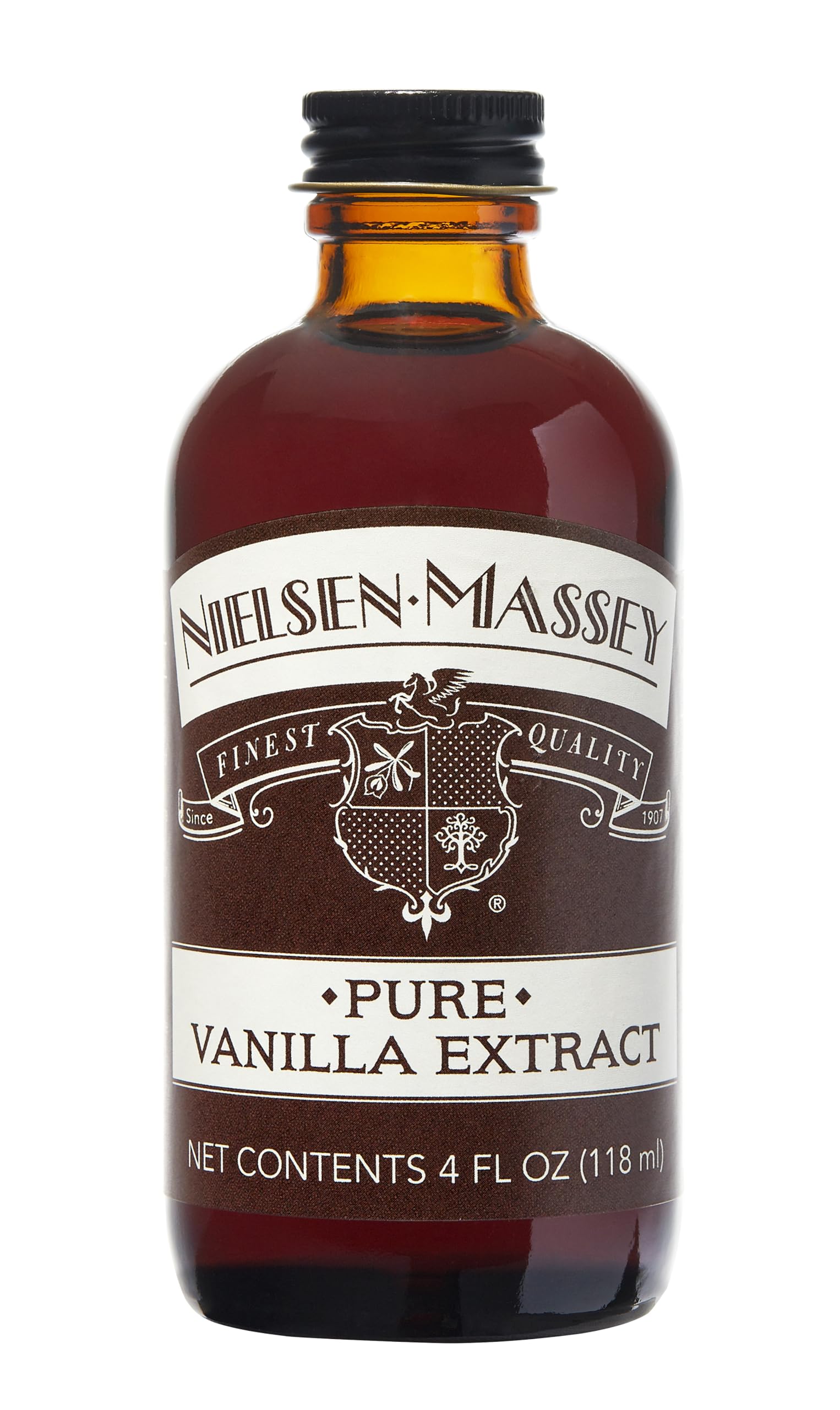
A standard Nielsen-Massey Madagascar Bourbon Pure Vanilla Extract at 4 ounces retails for roughly $18–$22 at mid-2026 pricing. At a typical baking usage rate of one teaspoon per recipe, a 4-ounce bottle yields approximately 24 teaspoons — a cost per use of $0.75–$0.92. Their vanilla bean paste in a comparable 4-ounce jar runs in the same price range, yielding the same 24 teaspoons at the same per-use cost. At this quality tier from the same brand, the two formats are nearly price-equivalent. The premium emerges when comparing across tiers: Heilala’s single-origin paste at $20–$28 per 3.4-ounce jar pushes the per-use cost to $1.00–$1.75. Whether that increment is justified depends entirely on the application.
If you’re finishing a batch of pastry cream that will appear on a $14 slice of cake, an $0.80 increase in vanilla cost per application is invisible in the margin math. If you’re scaling a recipe to 500 units and using a tablespoon per batch, that same difference becomes $400 of additional input cost on a single production run — worth scrutinizing carefully. For small-batch producers, the decision rule simplifies: if visible vanilla specks are part of your product’s premium positioning, paste earns its price. If vanilla is a background flavor in a fully opaque product, a high-quality double-strength extract will deliver equivalent or better flavor return at lower cost per use.
Which Format to Choose: The Decision Frame
After reviewing published specifications, manufacturer documentation from Nielsen-Massey Vanillas and Heilala Vanilla, and editorial analysis from Serious Eats (“The Best Vanilla Extracts, Tested and Reviewed”), Cook’s Illustrated (“Vanilla Paste vs. Extract: When Each Shines”), and Fine Cooking (“Getting the Most from Vanilla”), the tradeoffs resolve into a clean decision structure.
Choose vanilla bean paste if:
- Your finished product is translucent or light-colored and visible specks serve a branding or premium-signal function (custards, creams, glazes, frostings, panna cotta).
- You’re working in a high-fat emulsion — buttercream, ganache filling — where paste integrates with less risk of carrier-phase separation.
- You want a meaningful heat-stability edge in confectionery applications that reach temperatures above 250°F.
- The incremental per-use cost is manageable within your product’s margin structure.
Choose pure vanilla extract if:
- Vanilla is a supporting flavor note in a dark, opaque, or heavily spiced product.
- You’re scaling production and the paste premium adds meaningful input cost without any visible return in the finished product.
- You need alcohol-free formats — in which case vanilla powder or glycerin-based extract are separate format categories worth their own evaluation.
- You’re building a starter extract pantry and need to stretch budget across multiple flavor profiles. Nielsen-Massey and LorAnn both offer solid single-fold pure extracts in the $4–$18 range that cover most everyday baking use cases reliably.
One sourcing note: Nielsen-Massey remains the consensus quality anchor for both formats at the mid-tier, consistently referenced by both Serious Eats and Cook’s Illustrated for flavor consistency and extractive quality. Heilala occupies the premium single-origin tier with supply-chain transparency that resonates with direct-to-consumer producers making provenance claims on their labels. Both are available through FlavoringStore.com in sizes appropriate for small-batch and professional volume sourcing. The format decision is less complicated than the shelf presentation makes it seem — know your product, know your margin, and the right vanilla format usually picks itself.